Cambodia’s Fields of Horror

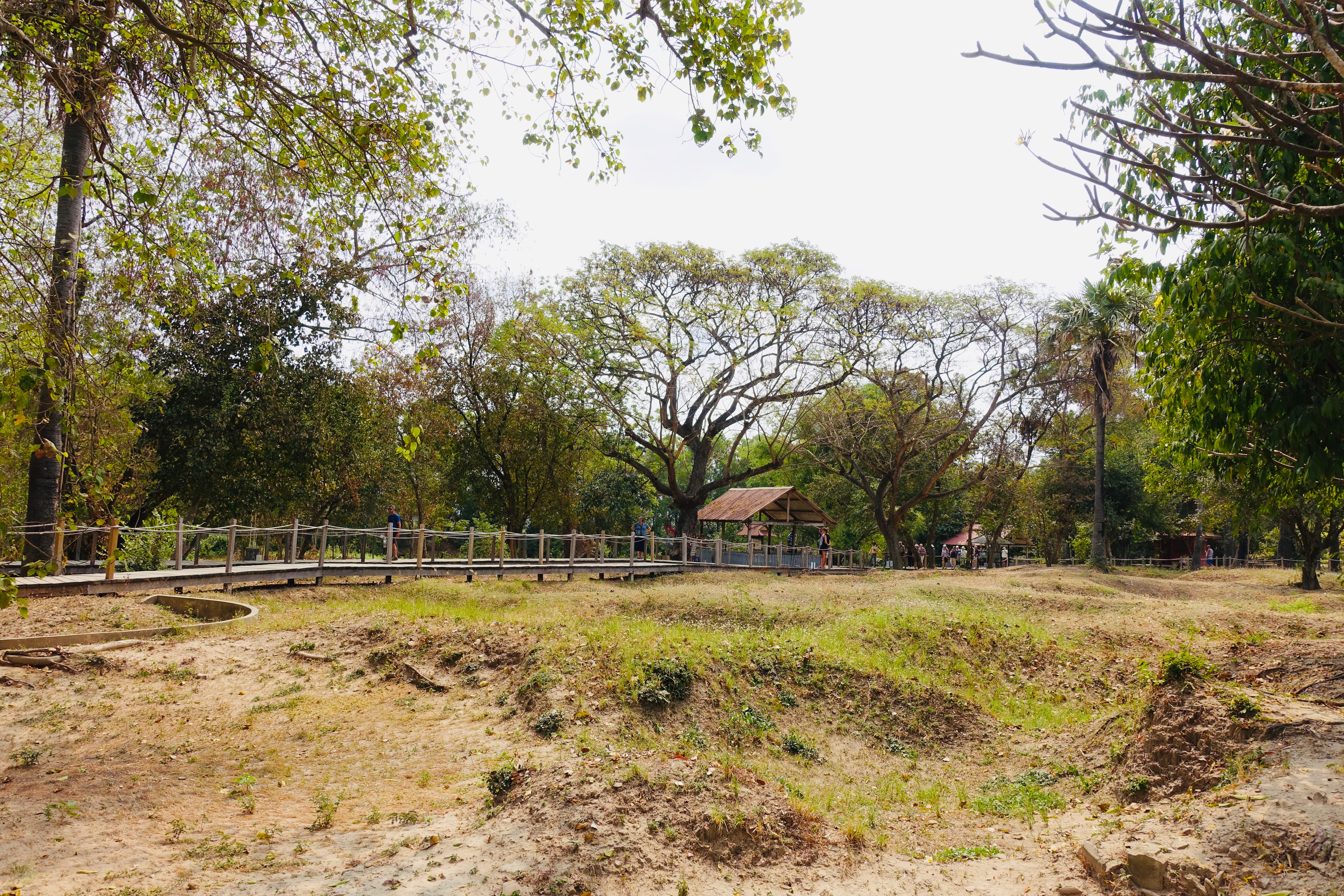
The depressions mark exhumed mass graves in Cambodian Killing Field

Joseph Stalin once said, “one death is a tragedy, a million is a statistic.”  

Perhaps it means when a person dies, the loss of their unique personality, their one-of-a kind story, helps us feel the worth of a single life and hence the magnitude of a single loss. However, once the scope of death becomes so broad and the numbers so staggeringly high we can no longer process the individual stories- the massive numbers strip the dead of their individuality, rendering them a mere statistic. 
 
I better understand Stalin’s word’s after visiting S-21, the former Cambodian high school turned interrogation and torture centre.  A place of such barbarism that it ranks with Auschwitz as one of the most horrific places on earth.

When the Communist Khmer Rouge captured the capital, Phnom Penh, in 1975, they began to implement their warped vision to turn Cambodia into a perfect agrarian communist utopia.  Cities were emptied of all residents, and people were herded into the countryside to begin to work for Angka- “the Organization.”  Nobody seemed to know who Angka was, but they knew Angka decreed that non-peasants were the “enemy of the people”.  City inhabitants, the educated, professionals of all stripes, even those who simply wore glasses were considered tainted by Western capitalist ideology; the revolution would require the “smashing” of such undesirables- a national blood cleansing.   Thousands of uneducated indoctrinated men, women, and children carried out Angka’s murderous dictates against their fellow citizens, friends, even family members. 
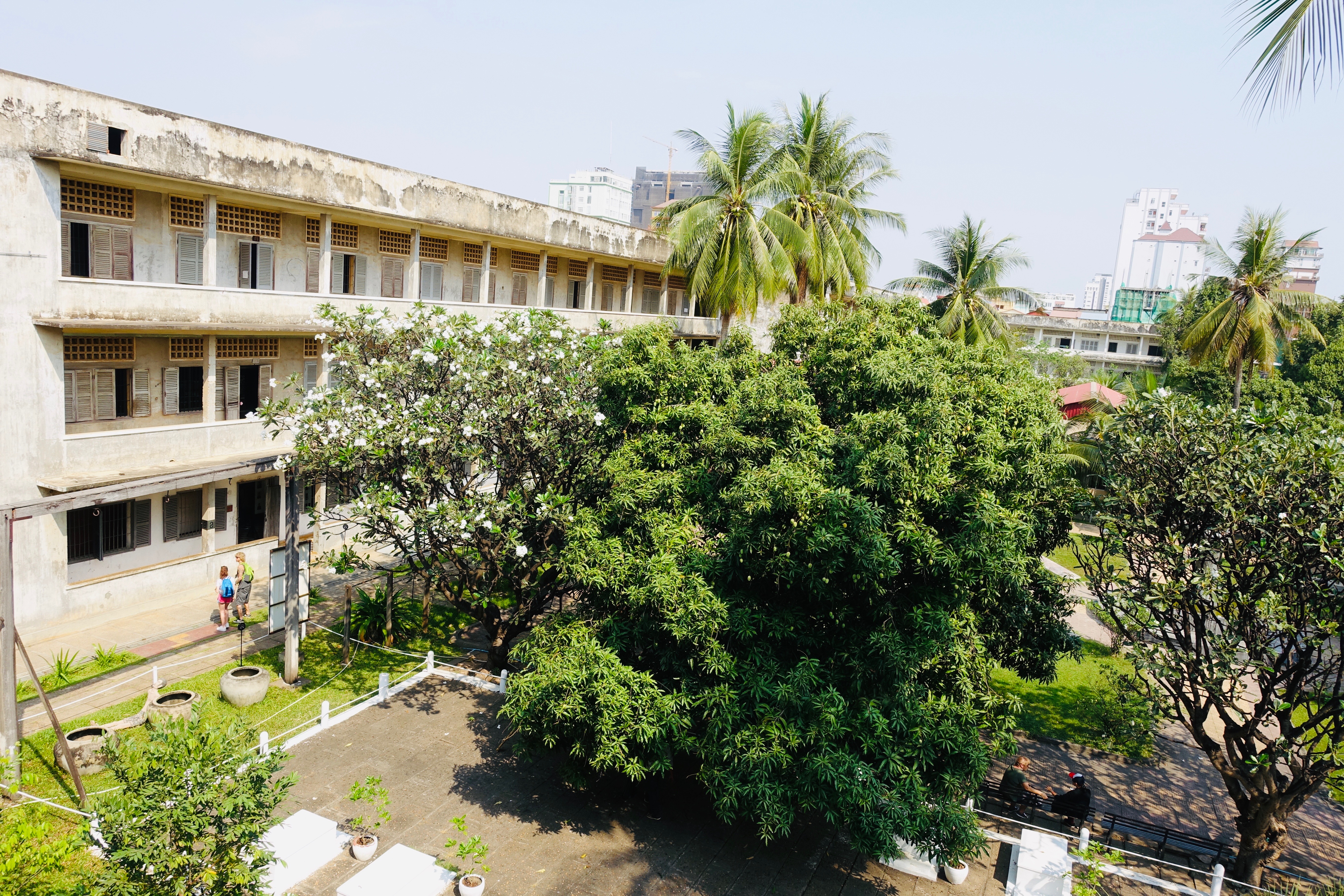
The centre court yard of S-21, the high school turned prison.

S-21 is the most infamous of the 150+ torture and execution centers that carried out Pol Pot’s (the reclusive leader of the Khmer Rouge) demonic cleansings. The network of such places has become known collectively as The Killing Fields of Cambodia.  The four year communist experiment resulted in over two million Cambodians killed, 25% of the population exterminated, a killing ratio surpassing even the horrors of Rwanda or Nazi Germany.

Over 20,000 innocent Cambodians were dragged through the gates of S-21 from 1976-1979;  of those 20,000, only 7 walked out alive.  Anyone arrested by “the Organization” were automatically guilty, (“Angka doesn’t make mistakes; you were arrested by Angka; therefore you are guilty”). Those arrested were tortured until they confessed their crimes and gave up the names of their “co-conspirators.”  Confessions all matched a single predetermined narrative; people were forced to confess to being an agent of the CIA, KGB, or a Vietnamese spy sent to overthrow Angka.  The accused were bewildered and confused (most had never even heard of the CIA or KGB) but agreed to the ludicrous narrative to end the nightmarish torture, with the promise that “all will be forgiven once you confess.”  That of course was another lie.  
Not a drop of pardon or pity resided in S-21.  
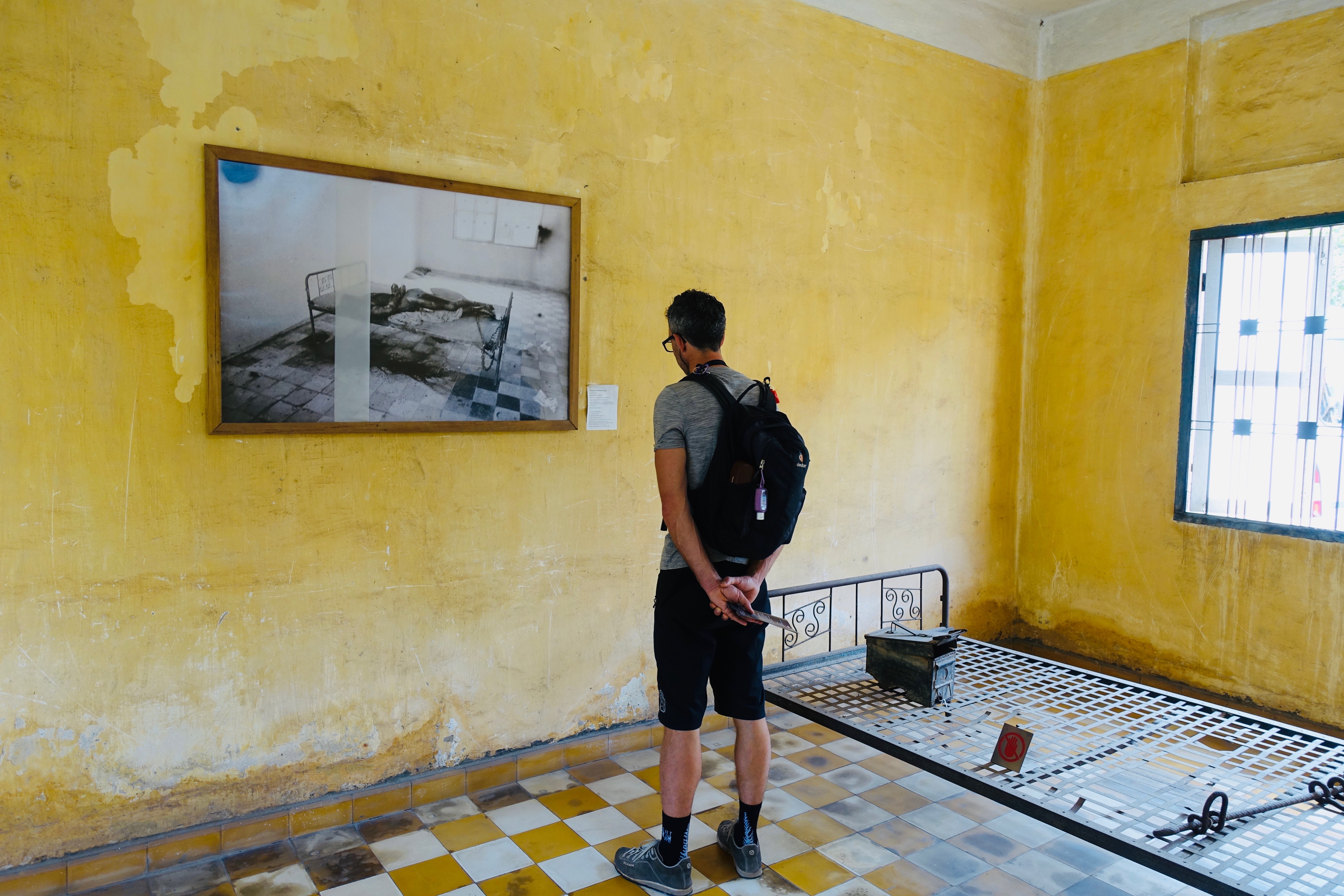
A torture cell. The ghastly picture was taken when Vietnamese soldiers discovered S-21. The body in the picture was the last victim to be shackled and killed in this bed.

Once confessions were signed, prisoners were blindfolded, loaded onto a truck, and driven at night to the execution sight, where a ghastly death by brute force awaited them; their bodies then dumped in mass graves, giving rise to the macabre but accurate name, “The Killing Fields.”

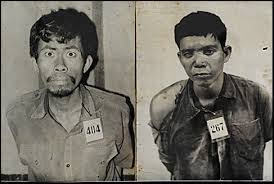
Like so many other authoritarian regimes, the Khmer Rouge’s attention to detail in documenting their crimes is bewildering.  When a prisoner arrived at S-21, they were each photographed.  For some, it was their first picture ever.  For all but 7 it was their last.  
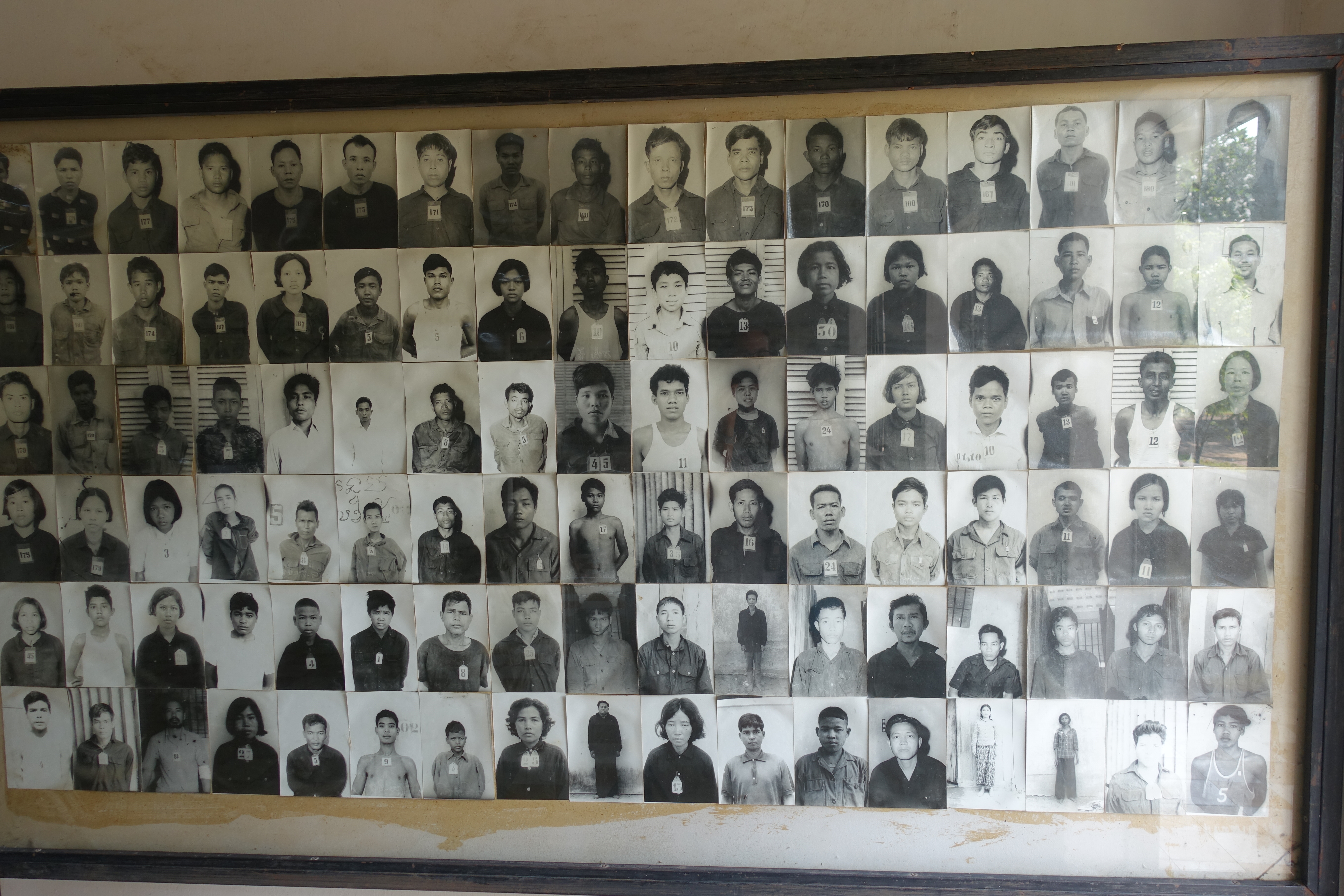
A few of the many Cambodians imprisoned, tortured and executed at S-21.

Today these pictures line the walls of S-21, thousands of faces staring out at visitors. The sheer number of faces is overwhelming and I’m tempted to see them as one mass of faces and quickly move through- but to do so would strip them of their individuality and fulfil Stalin’s words.  
I stop and say to myself, “every single person here was a life of infinite value. You must not walk past any of them.”  I force myself to look into the eyes of every single person in every single photograph; each one a life filled with aspirations, each one a person who loved and was loved; each one a bearer of the Image of God. 

The collective weight of their gaze is crushing.

Some faces show obvious fear; maybe they had a premonition of the unspeakable horrors awaiting them.  Some faces are etched with pain, obviously bloodied and battered, their eyes swollen with tears, evidence “the smashing” had begun.  
Some people smile for the camera, maybe hoping to ingratiate themselves with their captors.  They found no kindness.  Every face in every photograph a living snapshot of a person already dead, the camera shutter falling as deadly as a guillotine.  For a picture in S-21 was a sure death sentence.

As I move along the display I purposely stare into the eyes of every man, women and child I see.  Most of them posed in front of the same sterile concrete wall backdrop.  Some eyes are resigned, most are imploring; people simply wanting to live.  Ordinary people who just want to go home to husbands and wives, to see their children again.   As I move through, I feel this overwhelming outrage mixed with this unnerving evidence that unspeakable evil lurks in our species.  Life after life smashed. 
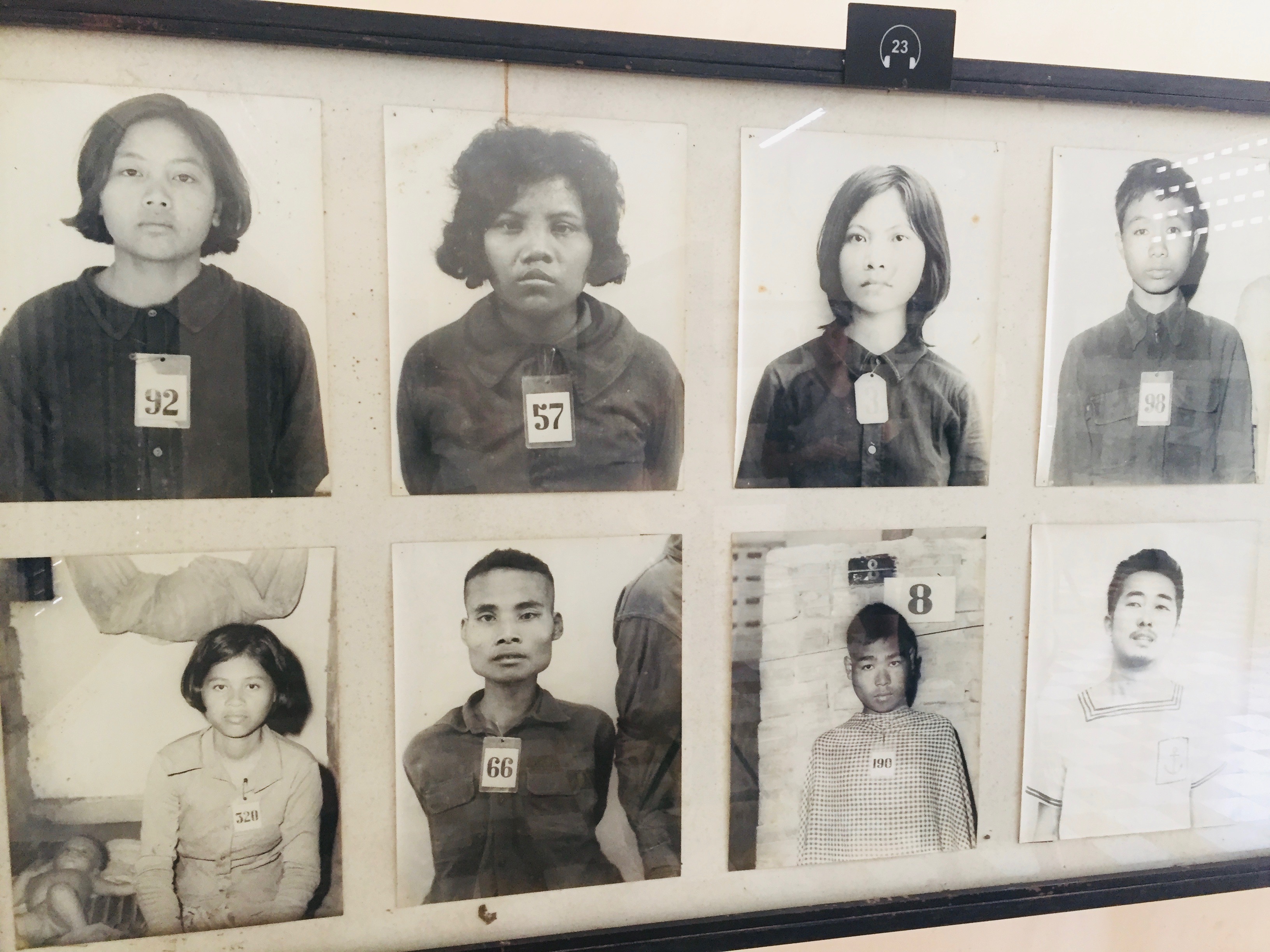
Age was of no consequence to the torturers. Neither young moms, nor their children were spared.

Leaving the rooms of photographs you see first hand what “smashing” involved.  The interrogation rooms have been frozen in time exactly as they were that morning the Khmer Rouge bid a hasty evacuation as Vietnamese troops overran the city.  On display a creativity of torture so dark and disturbing, it could only have been brainstormed in hell itself.  Things so evil and awful, I refuse to repeat them.  It becomes clear that death would have been the only mercy the prisoners of S-21 were shown.
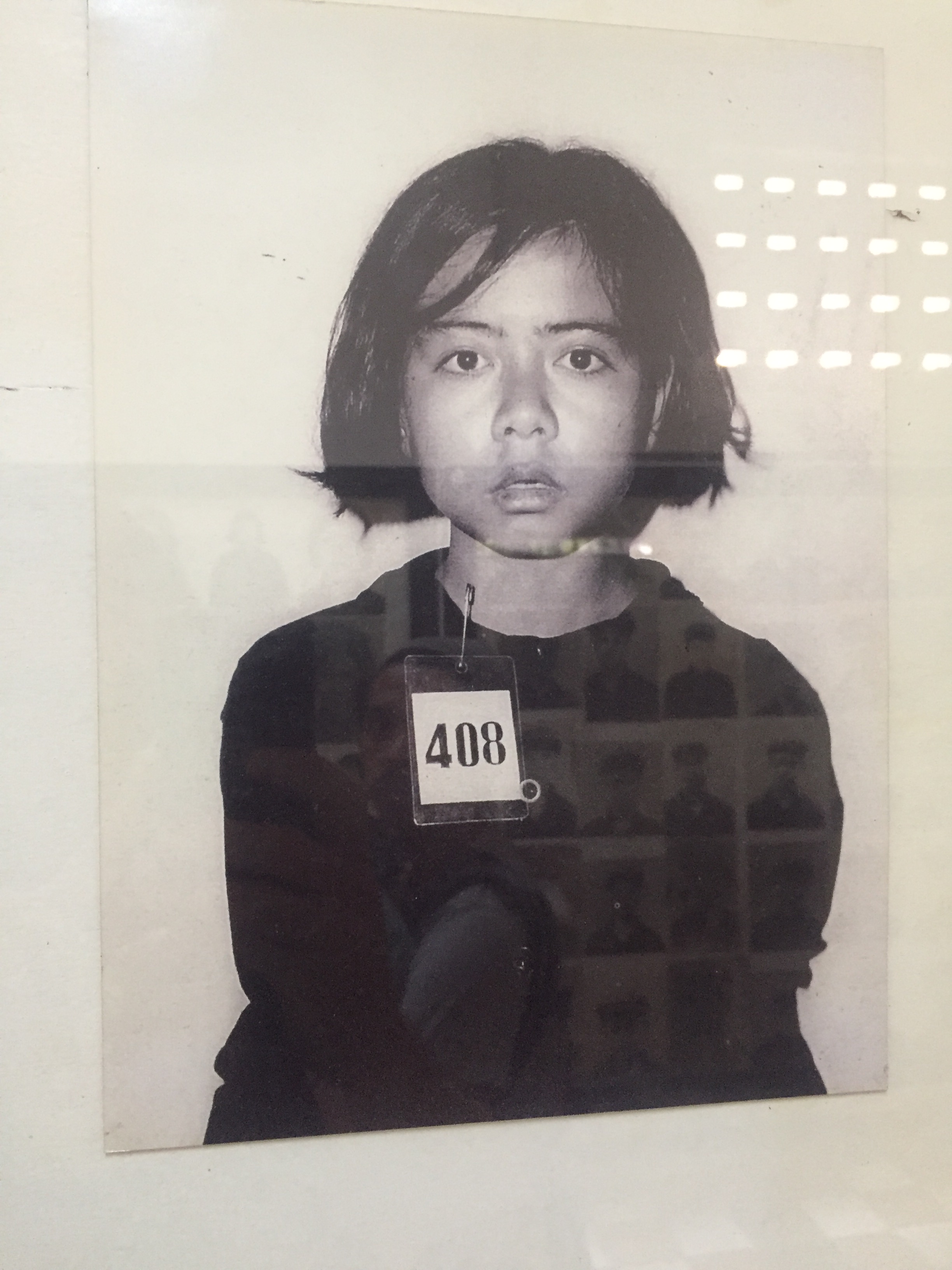
This picture haunts me.

Shaken by S-21, we drive 20 minutes out of the city to the Choeung Ek Killing Fields.  This was the place each of these people took their last breath. As you walk the dirt path snaking between fruit trees you come to a large tree on which Khymer soldiers hung speakers to play revolutionary music to drown out the victim’s cries so that neighbours wouldn’t be alerted to the horror happening every night in the fruit grove.

Beyond the tree, the ground is pockmarked with large holes, exhumed mass graves, each with a sign giving more Stalinist statistics:  “416 victims were buried here”  “137 women found here.”  You add the numbers up and more than 8,000 bodies have been exhumed so far.

Below my feet half buried in the dry dirt I see bits of rags, a Cambodian guide tells me they are clothes from the victims that the rains keep bringing up to the surface. Then looking closer I see bones, lots of them poking up through the dirt; pushed up, like the earth is both trying to purge itself, and testify to the atrocities.
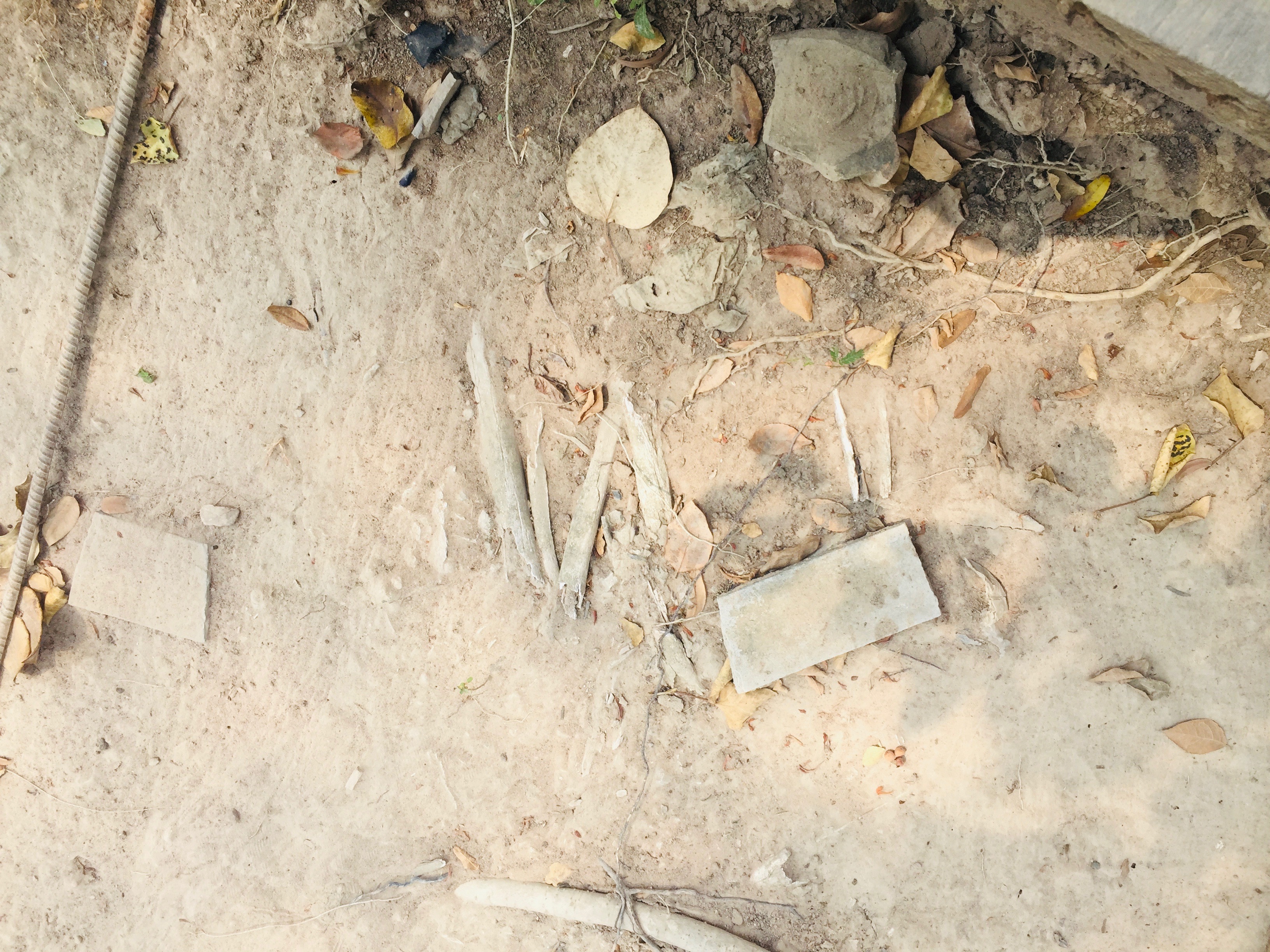
I find my lip quivering and my fists clenching and unclenching over and over; I feel the weight of evil so strong it could grind a heart to dust. Part of me feels wrong for being here, like I’m some highbrow spectator or macabre ambulance chaser; another part of me thinks everyone should see this.  
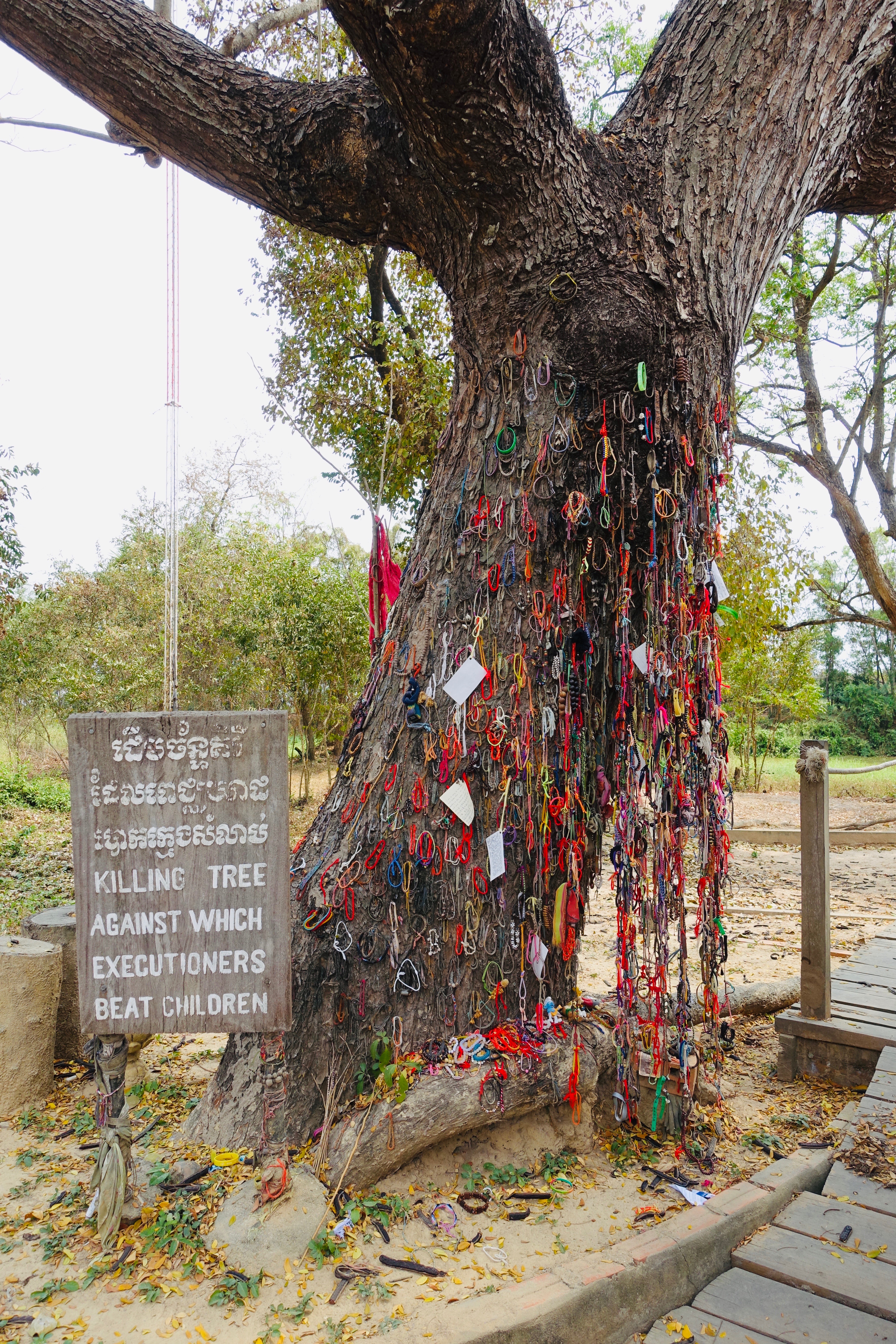
No words.

Leaving the Killing Fields I’m unsure of how to respond, should I feel pity or anger; should cry out for justice, or weep at the senselessness of it all?  Yes.

Then I wonder if I, a mere spectator from afar, am so traumatized by this historical reality, how have Cambodians moved forward, when the “statistics” are their family members, their loved ones?
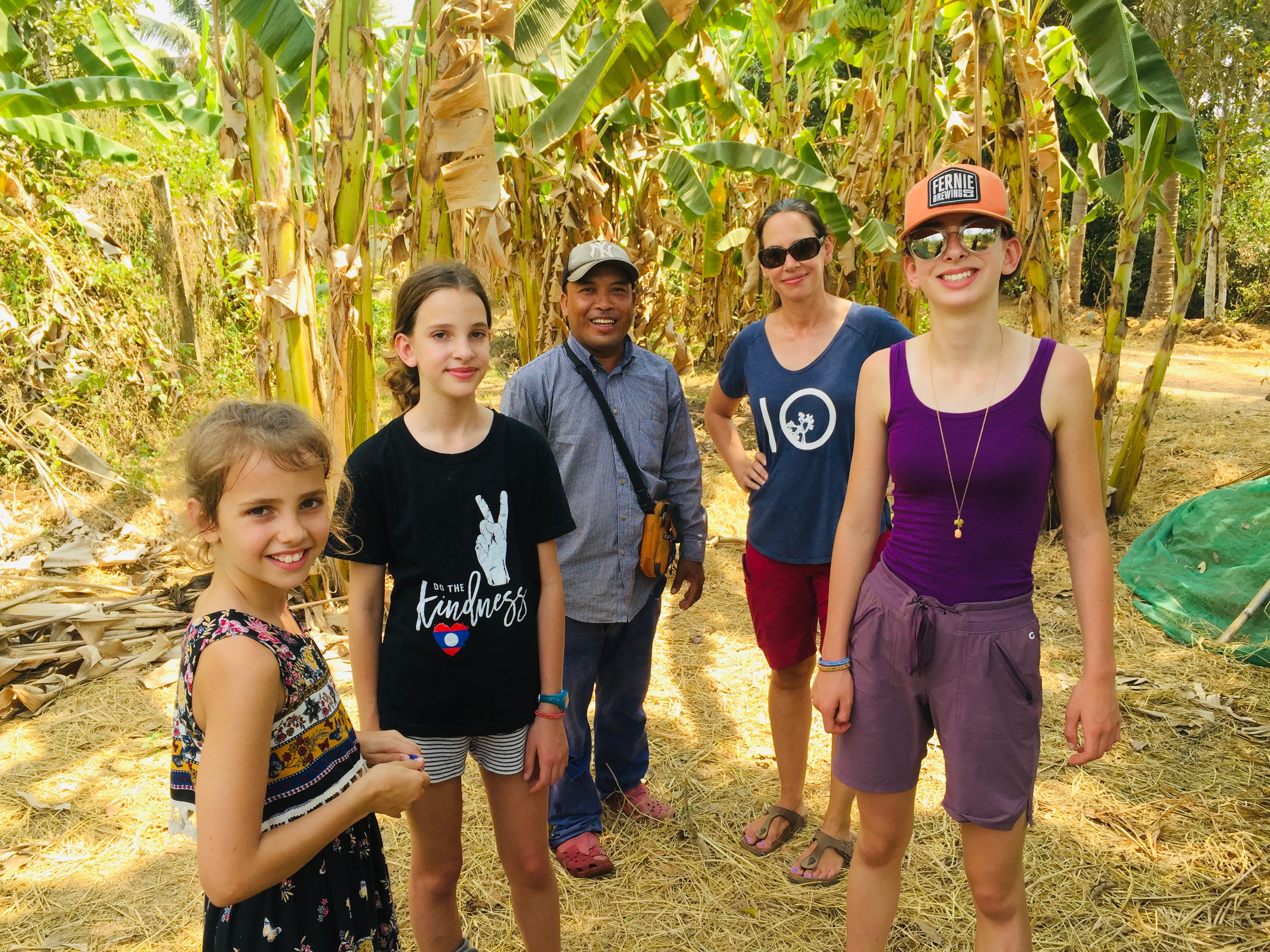
Our new friend Paul at his family farm.

I have met many Cambodians, have been invited into their homes, ate at their table. Everyone has a story about the dark days.  Paul, our taxi driver whom we hired for a day (possibly the best money we have spent on the trip so far), brought us to his home, so my girls could meet his daughters and we could eat with his family.  Paul was born in the waining days of the Khmer Rouge and lost his grandmother and two uncles in the terror. 

 Eric a Cambodian who fled to the US after the fall of the Khmer Rouge, was my seat mate on a six hour bus ride.  We talked for hours. When we passed through the town of Kom Chapong, Eric got quiet and said “this was where the Khmer Rouge sent our family, my mom and two sisters were killed here.” Eric was 11 at the time.
I imagine an entire nation with PTSD trying to move forward, and silently pray for the many Erics.

Since the fall of the Khmer Rouge there has been minimal international effort to bring about justice.  Cambodia’s prime minister and most of the senior officials the make up the corrupt regime are former Khmer Rouge, have thrown up many stall tactics to protect the perpetrators.  A grand total of four people have been brought to justice.  
2,000,000 killed.  Four convictions. 

I’m not sure how a nation moves on, when your neighbour was also your former captor or torturer? I have no simple answers, but cling to a simple faith, that hope can rise from ashes, and life bloom from destruction.

After the horrors of the Holocaust the world said “never again.” But again happened -repeatedly- Bosnia, Rwanda, Sudan, and Cambodia. That is why, I pray many visit S-21, and as time moves forward, places like the Killing Fields become a distant history.
“Never again.”
sb
The Kid’s Highlights from Northern Laos

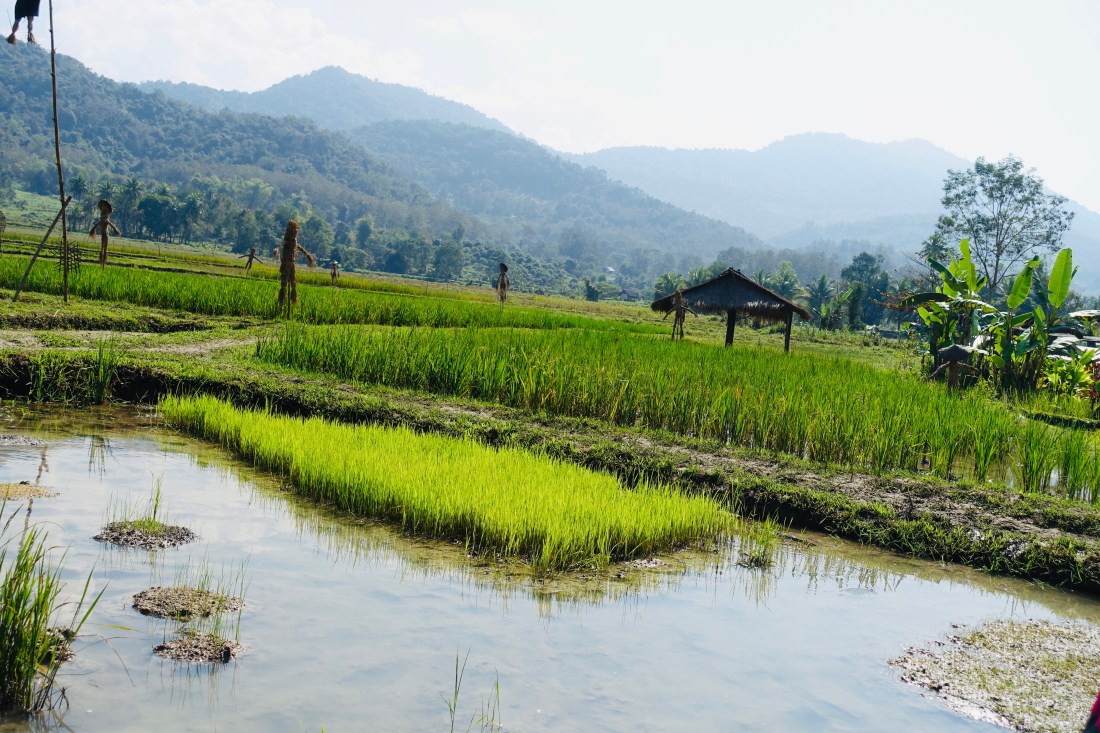
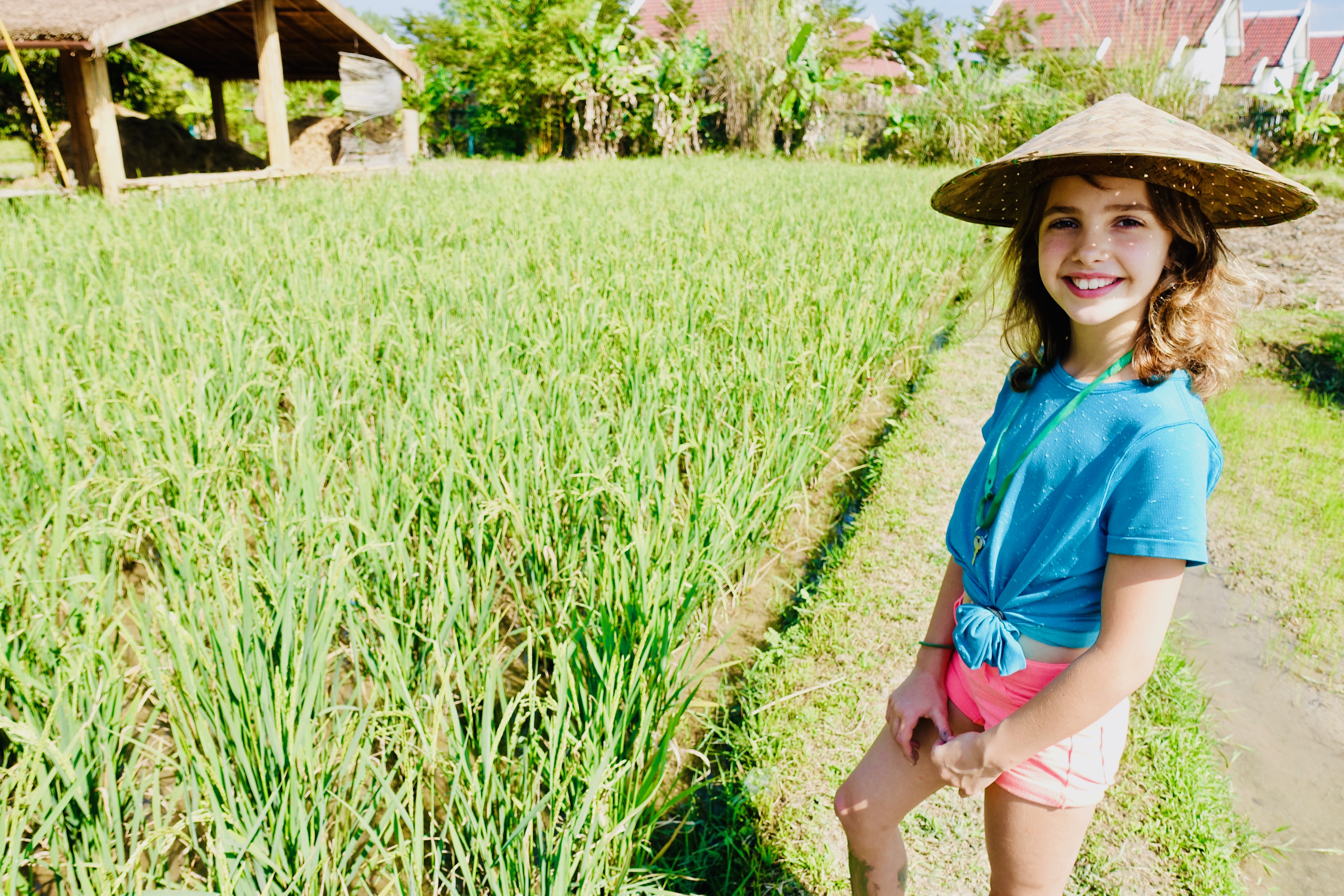
Lily – Age 8.  We did a lot of fun things in Northern Laos. I think my favourite was when we went to a farm and learned all the steps to growing rice. We even got to work on the farm and do the steps. Before you can eat the rice there are 13 steps you have to do.

The first step is you get a jar of water and put salt in it. To know how much salt to add, you put an egg in the water, when the egg is just barely floating you have the right amount . You take the egg out and put all of the rice for planting in the water and swirl it around. If the rice grains float it means the husk are empty or do not have a full seed in it. Those are scooped off and fed to the chickens. The ripe grains that sink in the water are good.

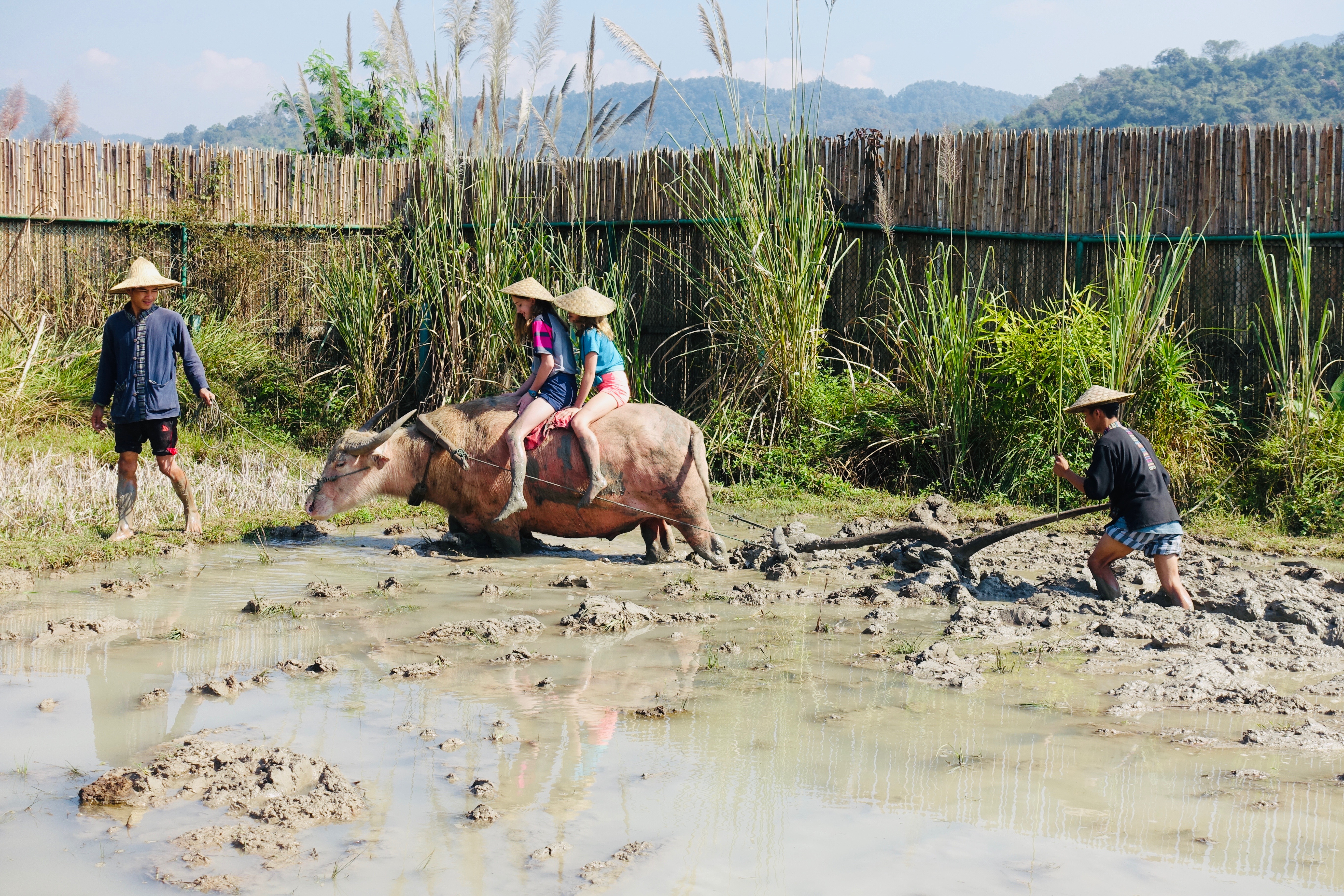
After that we got a small patch of mud ready and sprinkled all of the rice seeds on it. They will need to grow there for a couple of weeks. The next step is to plow the muddy field. The mud is deep and sticky and so we used a water buffalo named Rudolf. Rudolf had pink skin, and I got to ride him. Poor Rudolf, it was a bumpy ride! It is hard work pulling the plow so Rudolf only works 4 hours day. It takes many days to plow a field to feed a family as big as ours.

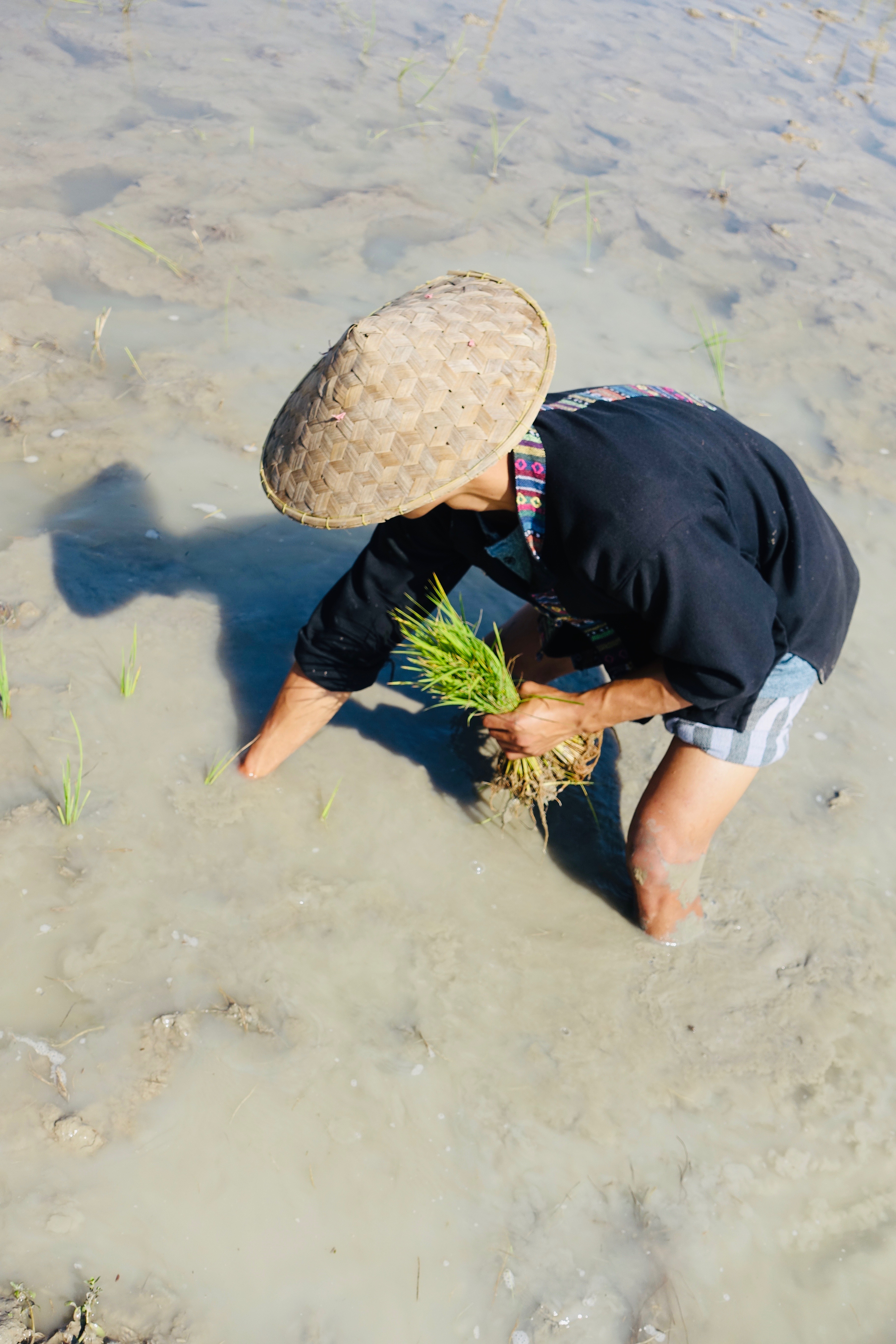
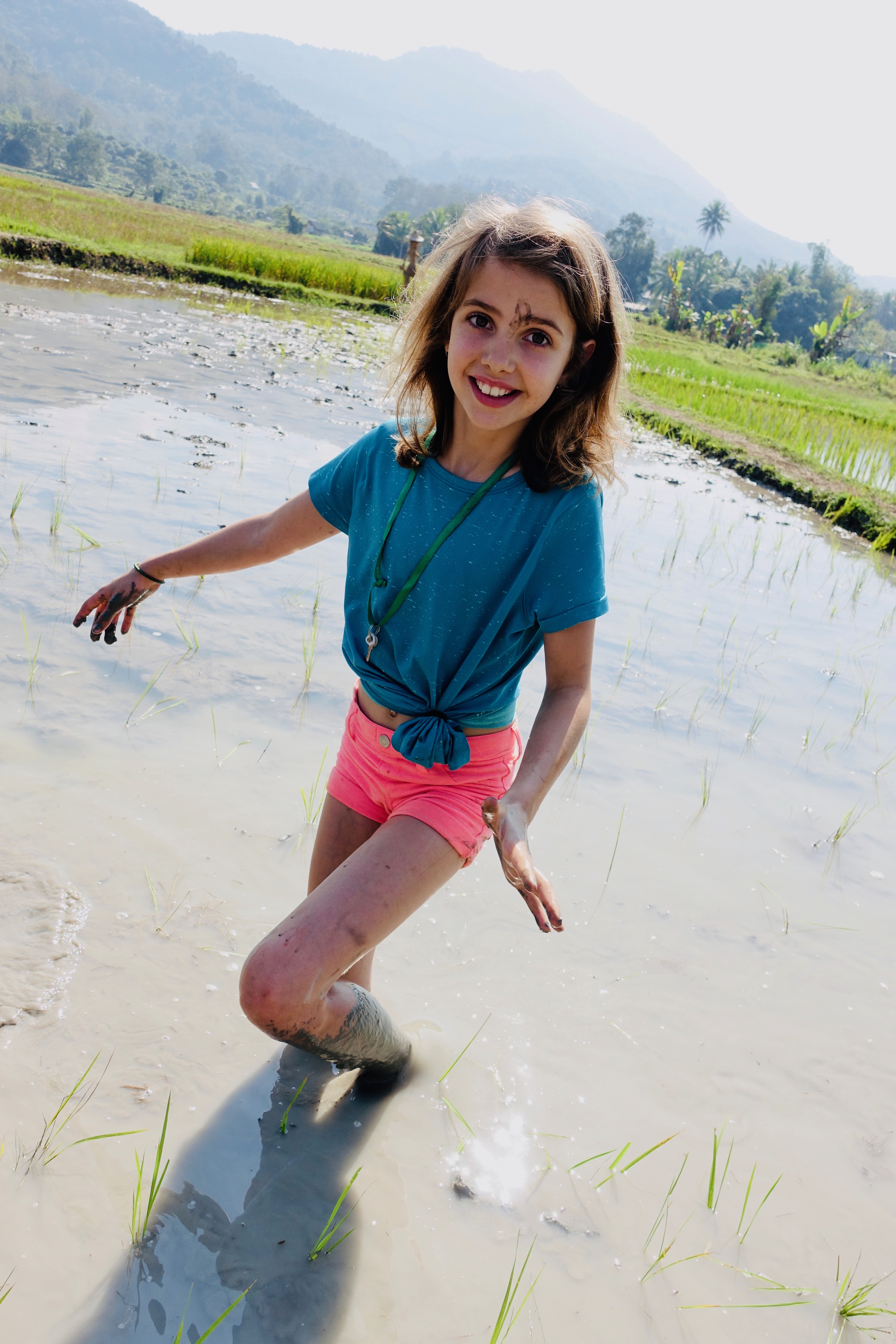
Once the land has been plowed, and the seeds that you planted grow into shoots, you replant them in the plowed field. They need to be spaced just right so the plants can grow big. We planted part of a field. They told us after there are lots of eels in the mud, and they sometimes bite. Yuck! I’m glad they told us after we were done. Each single rice planted will grow 200-300 grains on it! From one little seed!

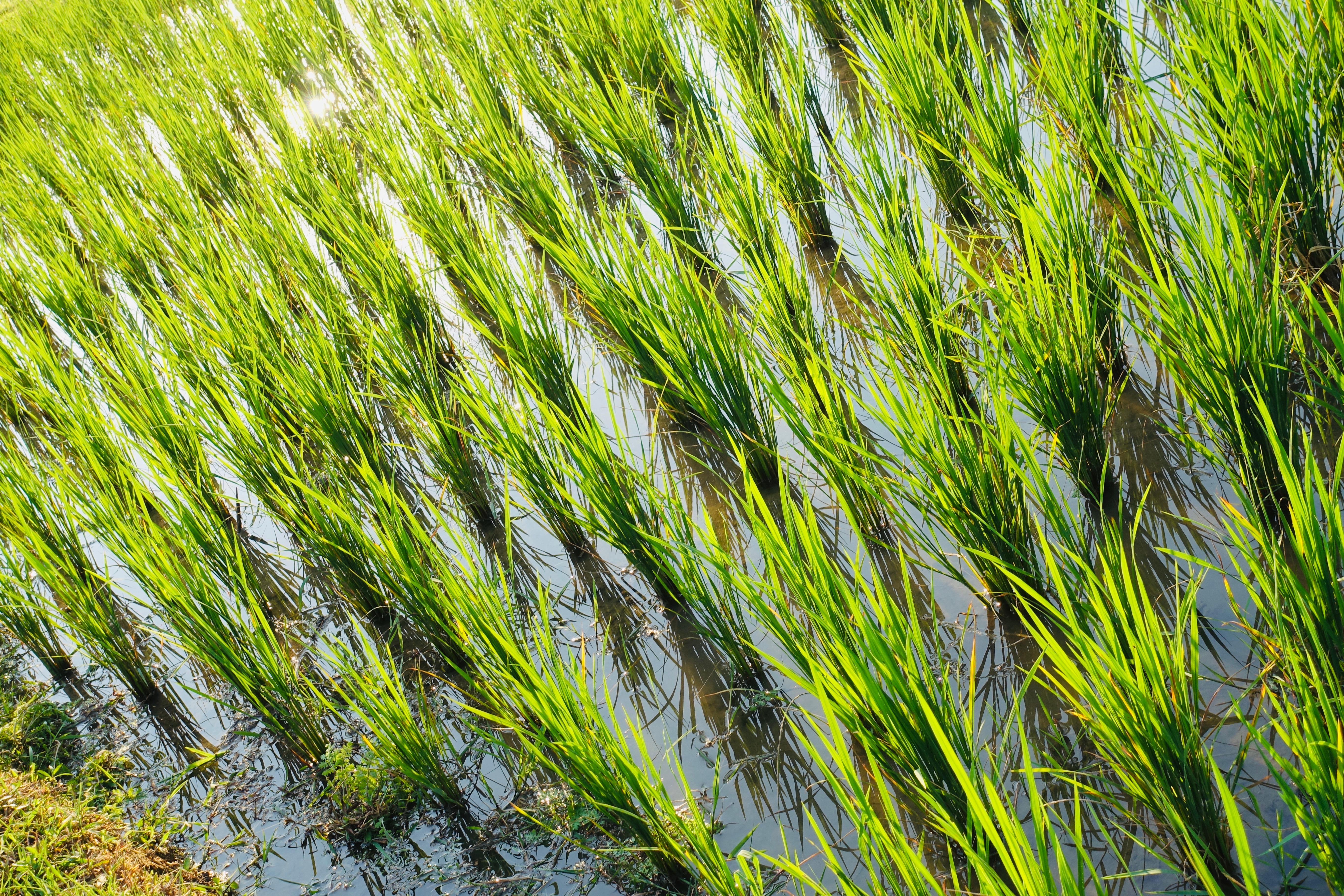
After that the next step is to flood the fields with water for ten days, then drain the fields for ten days. You keep doing this for a few months till the plant grows big.

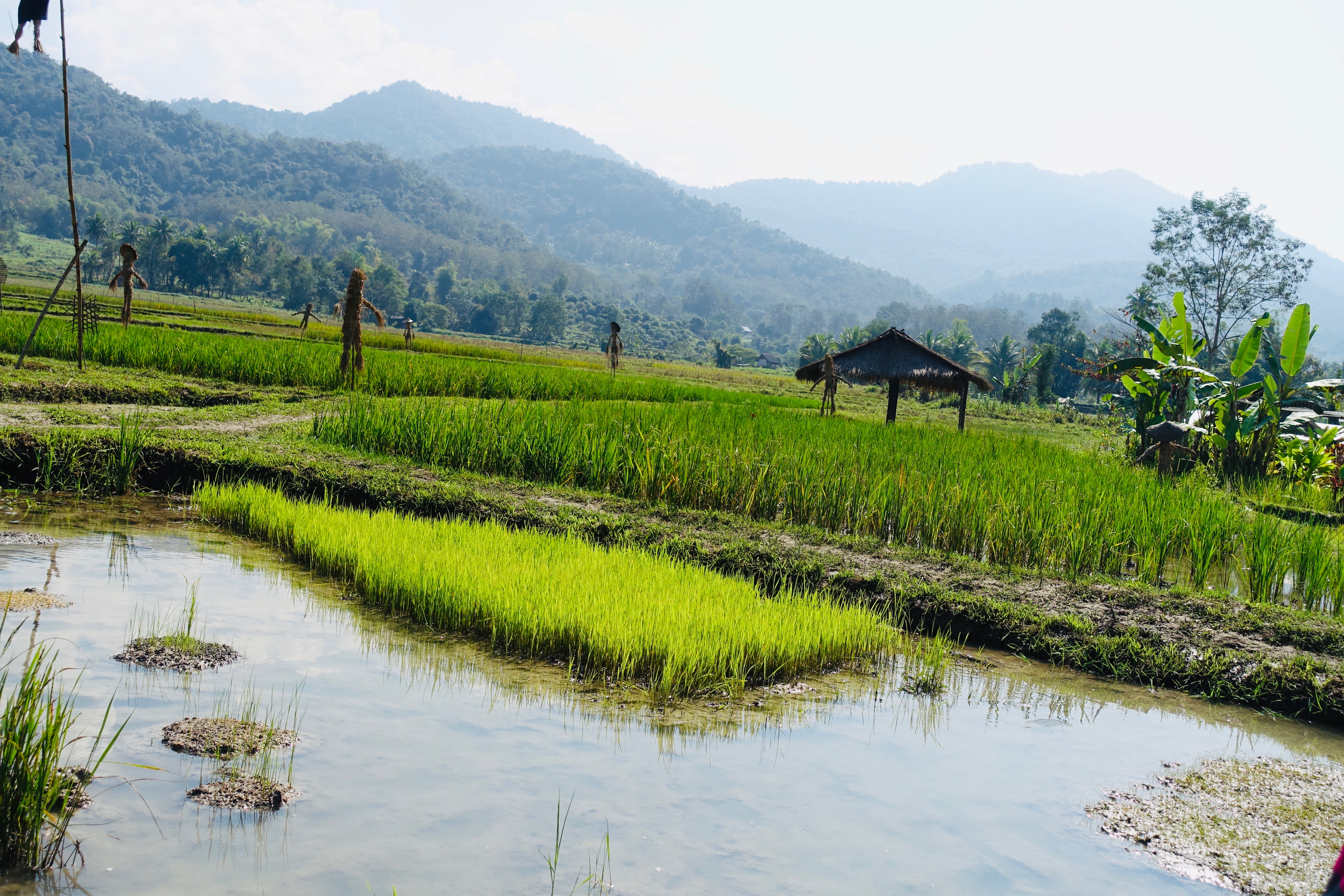
A flooded rice field.

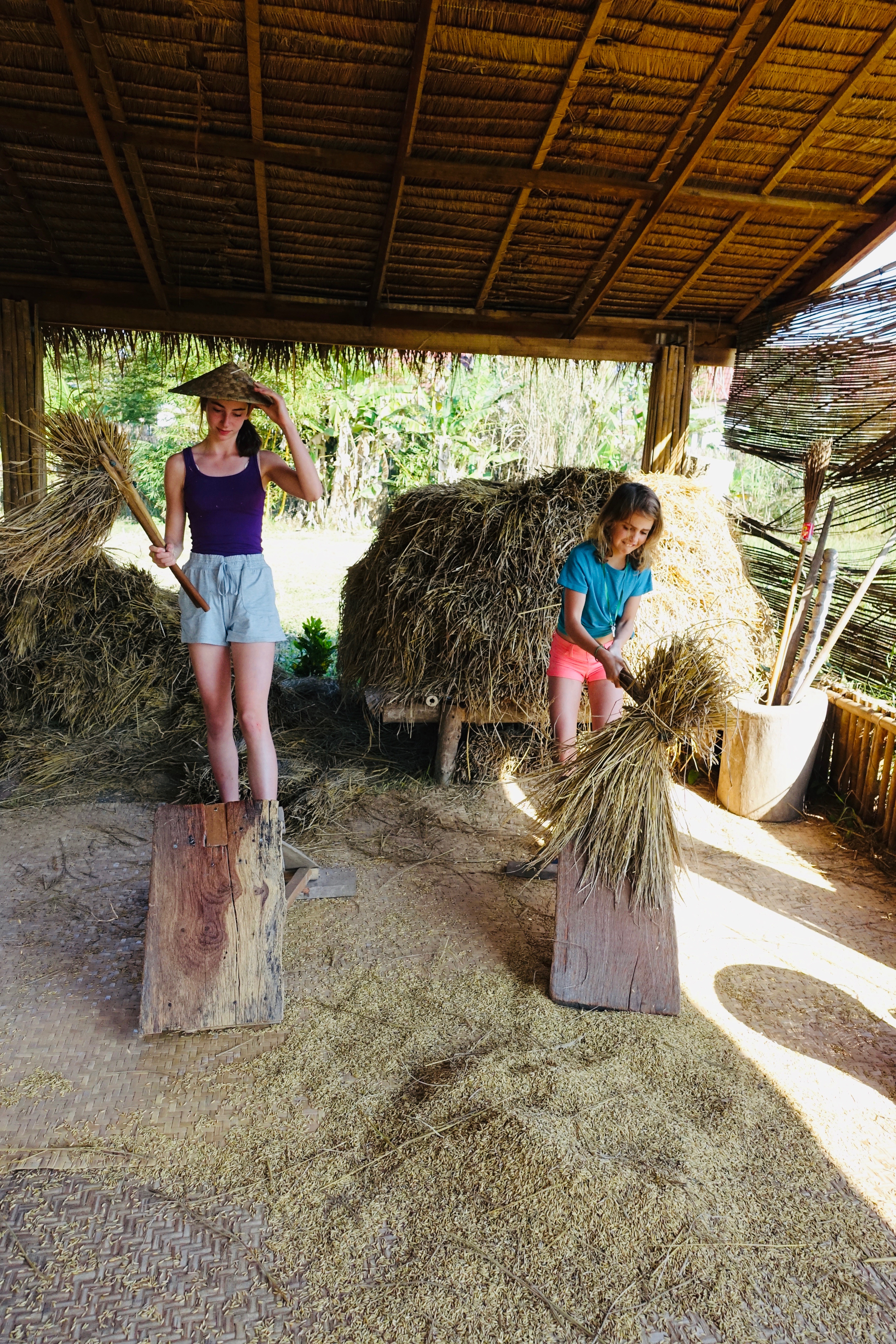
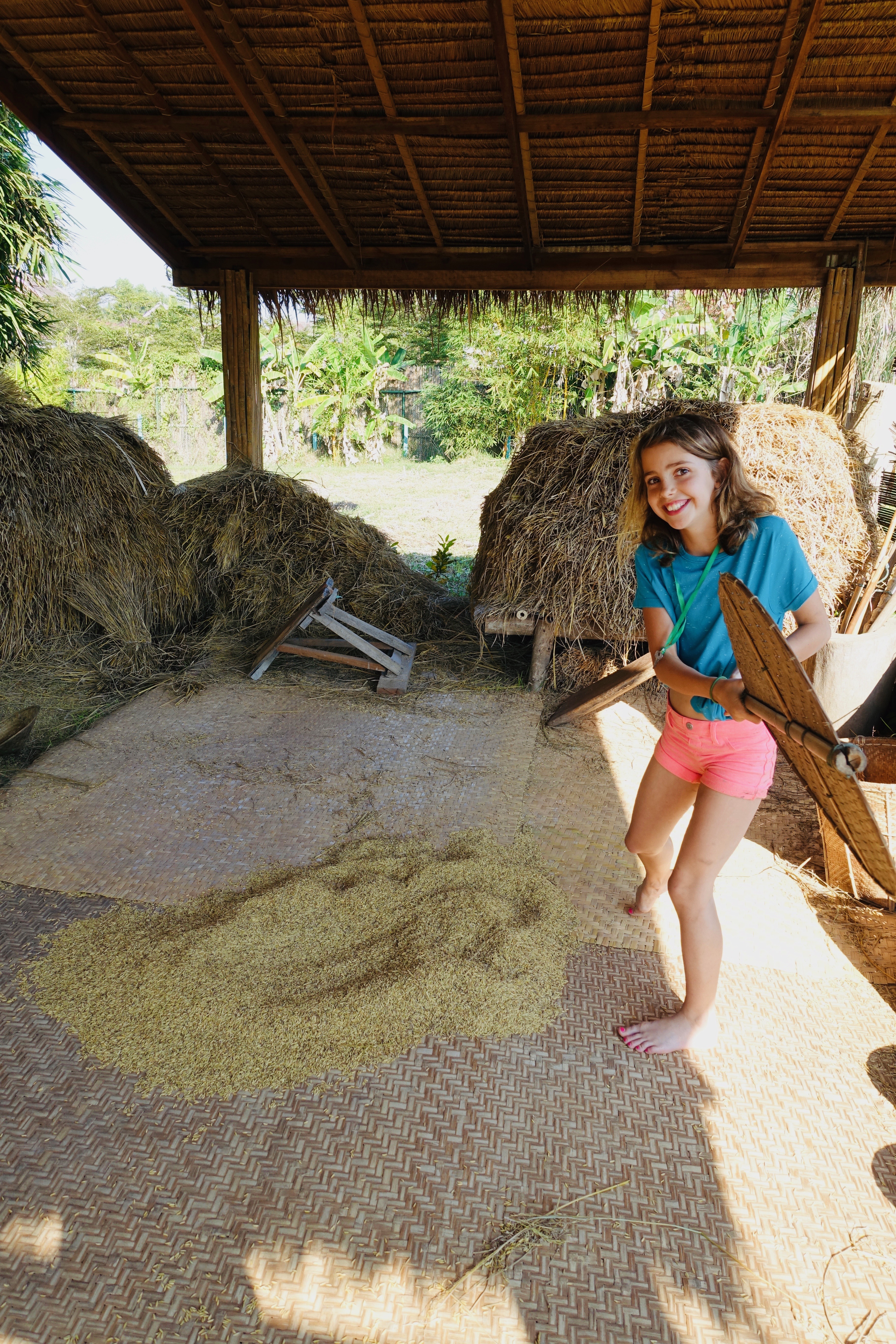
Next you cut the plants down and dry them in the sun. Then you take the plants and hit them against some wood to knock all the seeds off. Then we used a wooden fan to blow away the sticks and stuff from the rice.

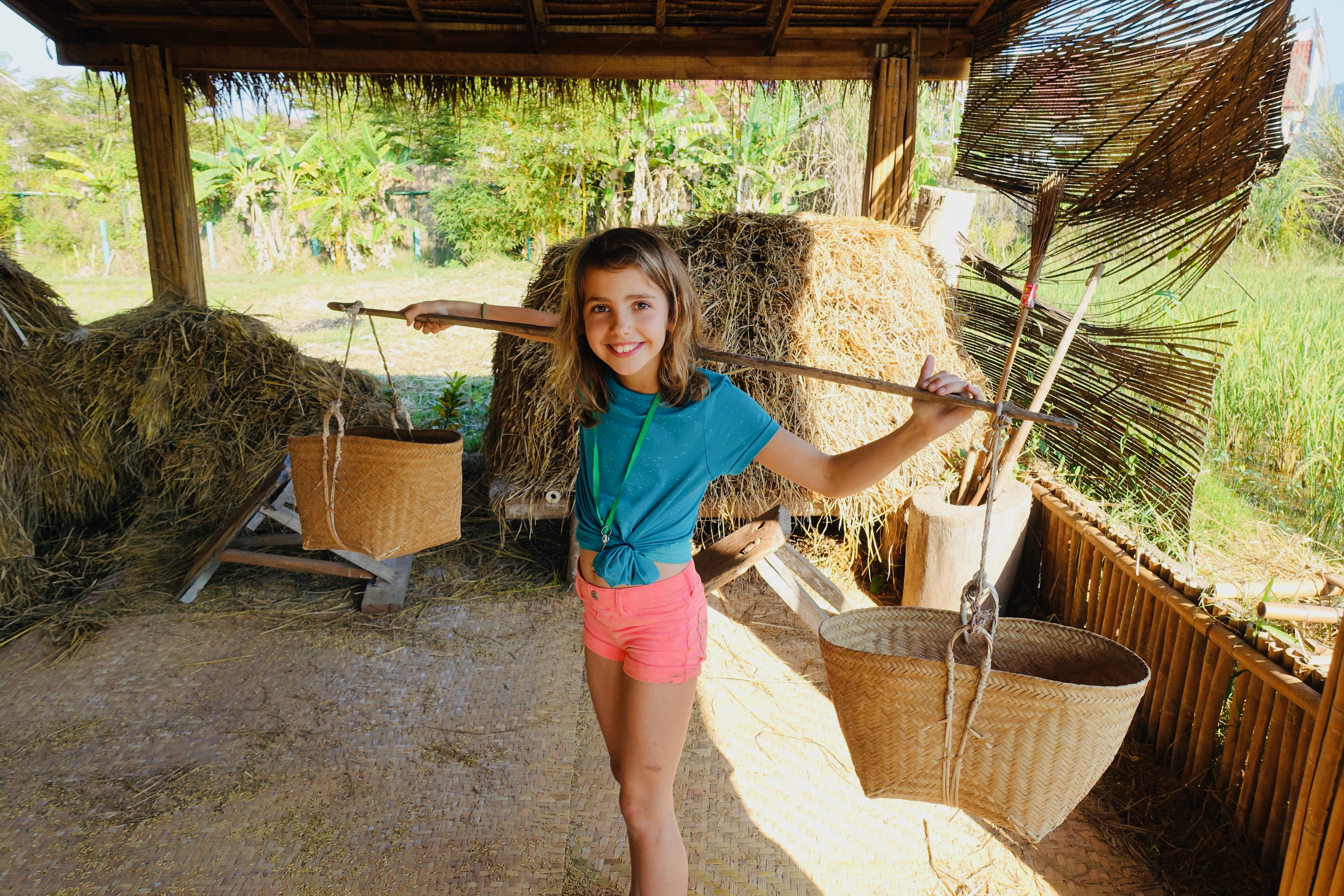
The rice is then soaked for at least three hours and then steamed to eat. People in Laos eat sticky rice with every meal, every day of the year. They work hard to have rice.

Carrying the rice.
The beautiful farm we worked on

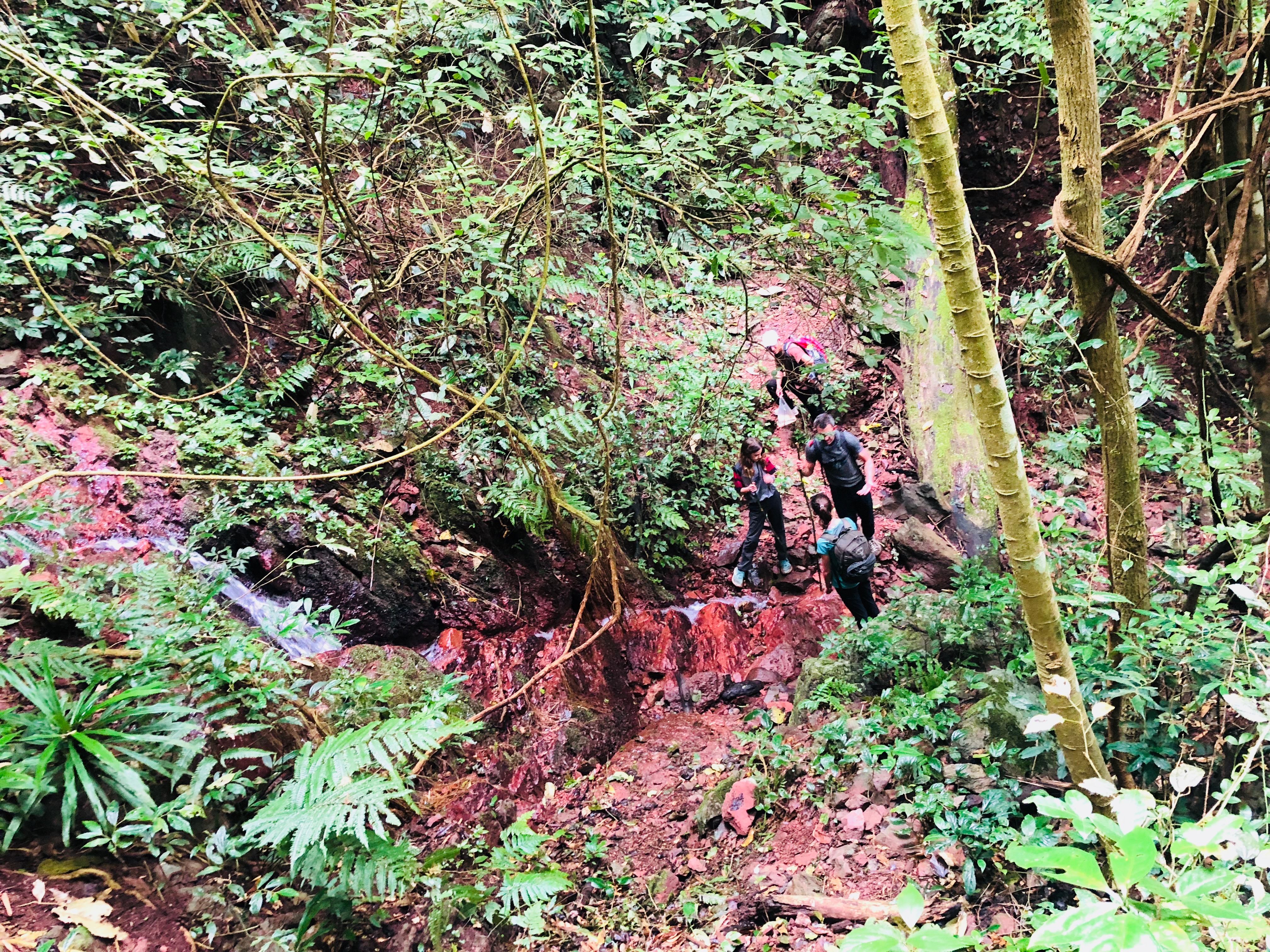
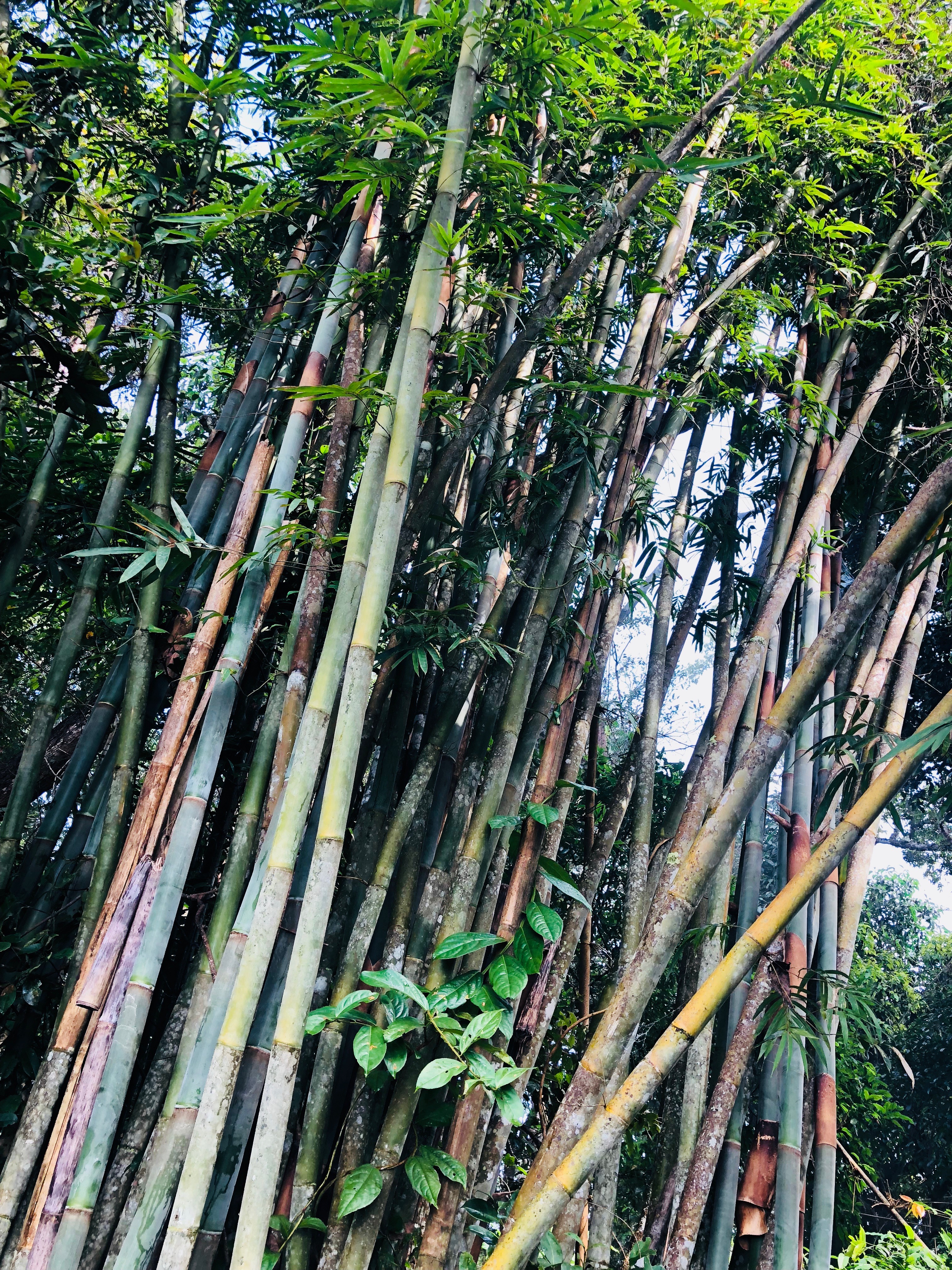
Sarah Age 11- The jungle is thick with lush trees. Bananas hang wild, waiting for their time to fall. Bamboo grows in every direction trying to get up above the other trees. Dead ones lay in a tangled mess everywhere. Colourful fungi grow on mysterious looking plants, bugs creep around and leeches wait for an unsuspecting leg to pass by. This was the wilderness we decided to trek into.

Dad and kids strategizing about snakes.

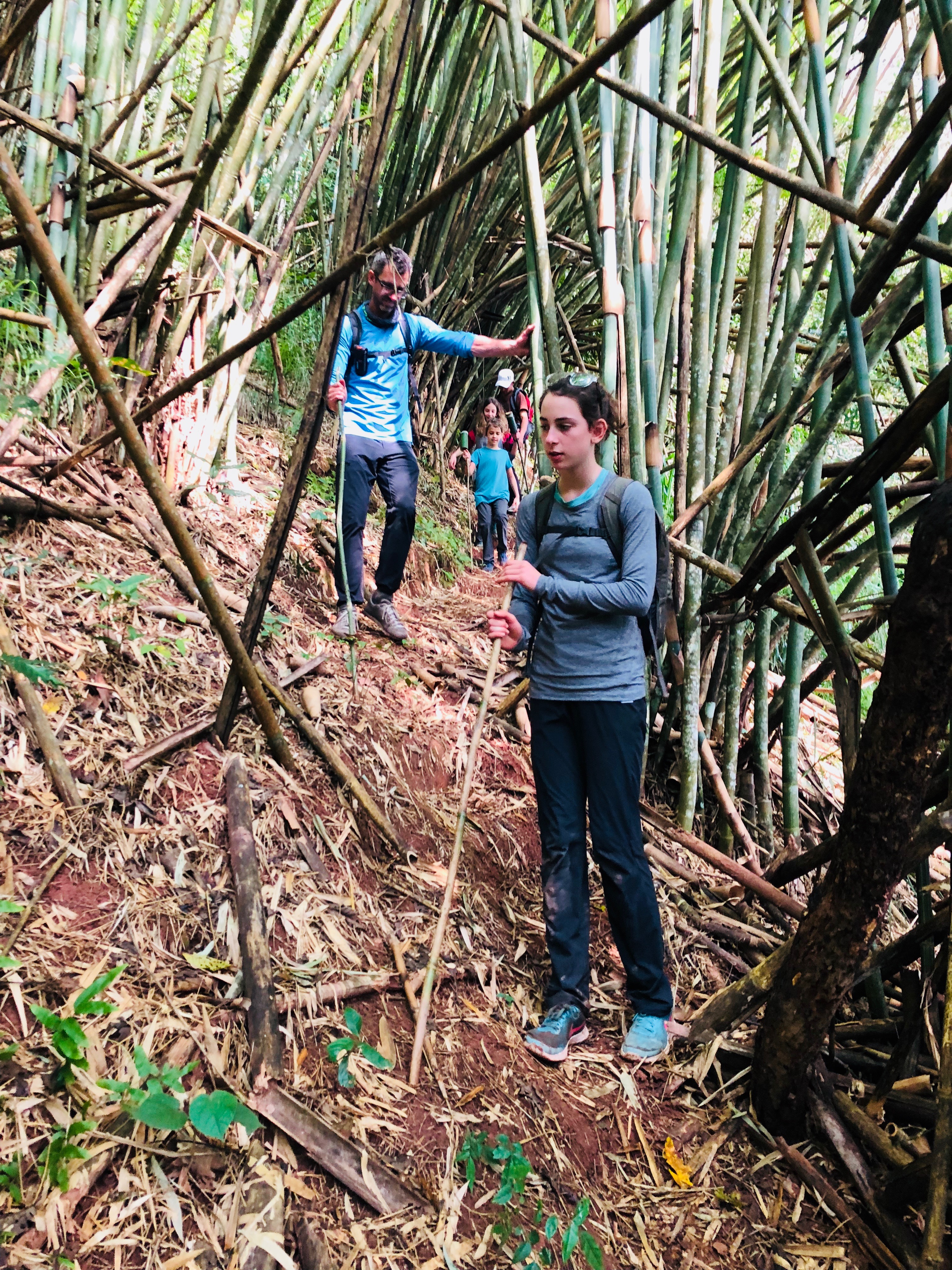
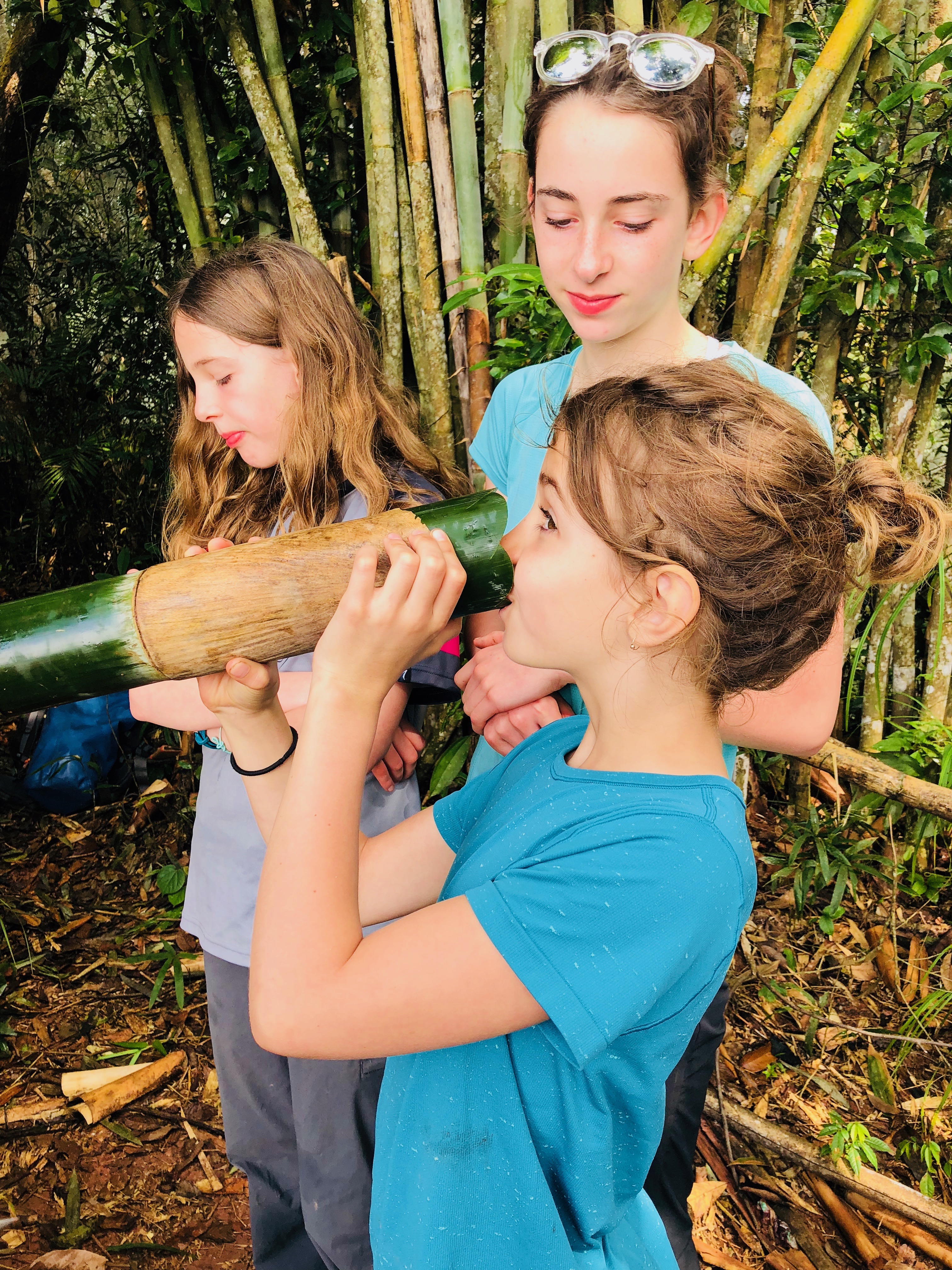
As we worked our way through the lush jungle slowly getting deeper in, we discovered many remarkable things the jungle has within it. Like leaves that taste just like lemon, or how if you cut open the long green bamboo it has perfectly clean water inside of it good for drinking (which we did). We worked our way up a slippery muddy steep trail, using our bamboo walking sticks and helping each other get higher and higher on the mountain. A slip left you covered in mud.

Gong and La were the names of our helpful guides. As we walked my knees were shaking, afraid that hanging just over my head, or laying just off the trail was some terrible deadly snake! The guides told us to tap your hiking stick on the ground, the snakes feel the vibrations and move away. Maybe it worked cause we didn’t see any!

Lily drinking fresh water hidden in the green bamboo

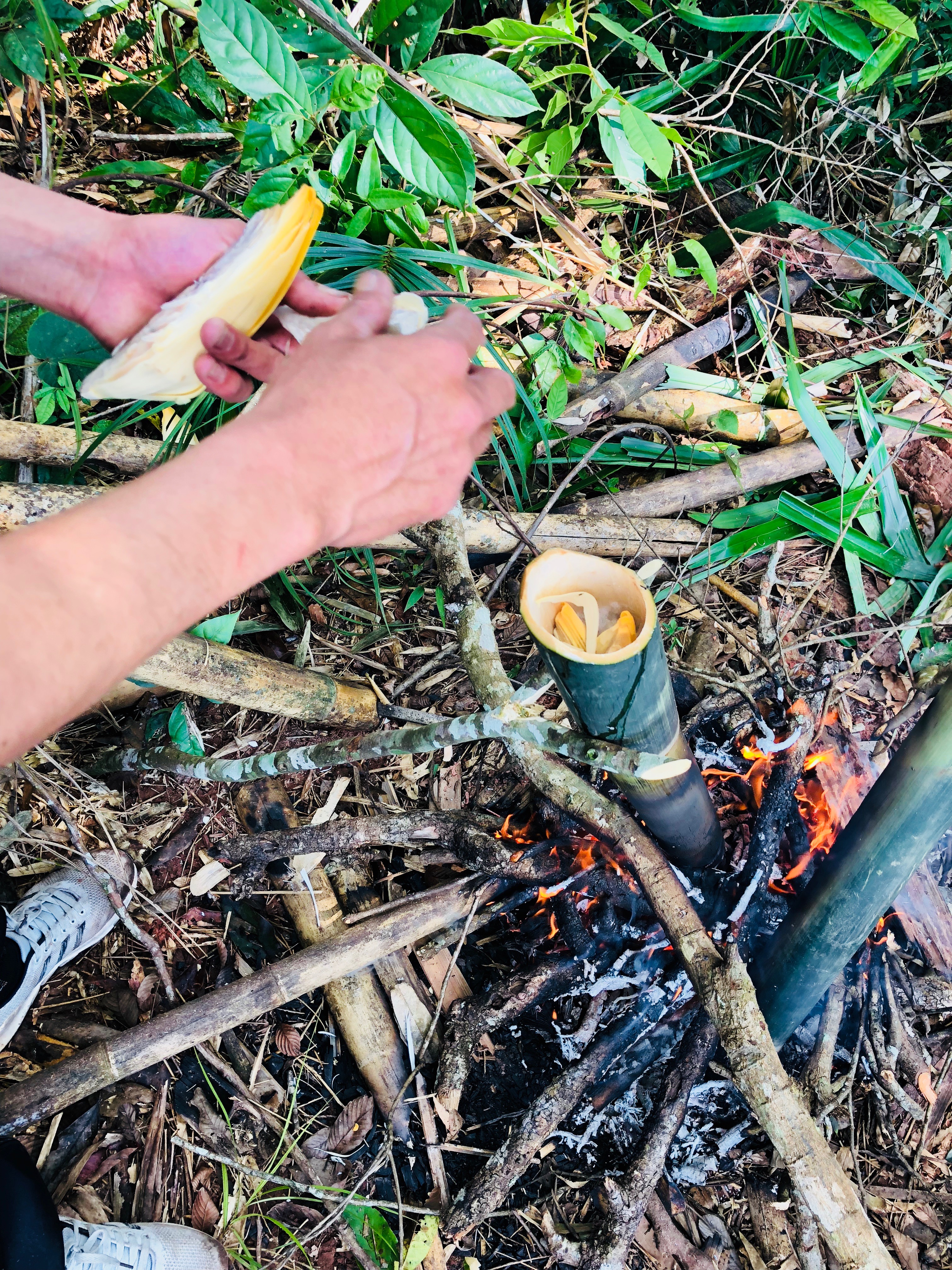
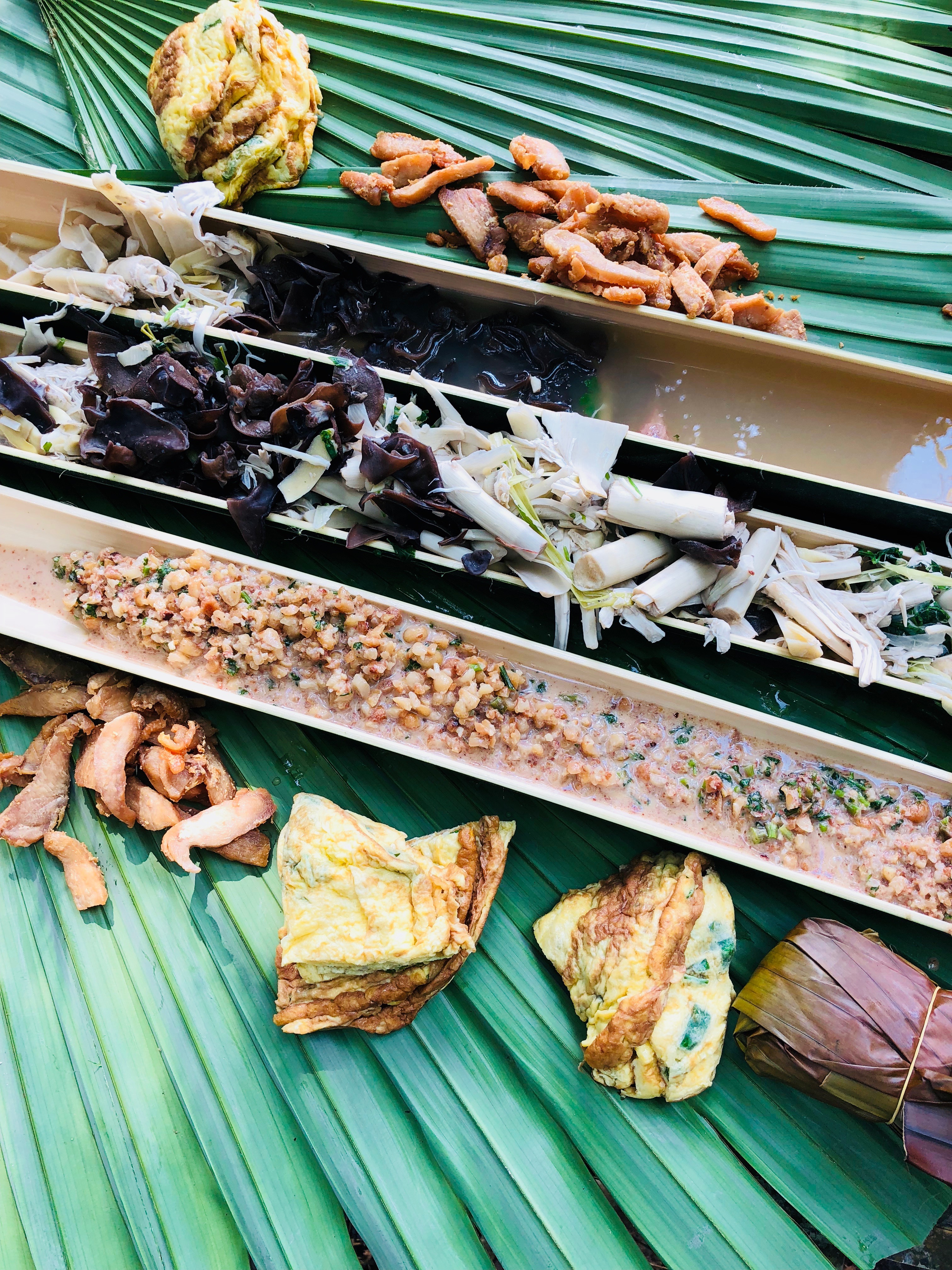
After 5 kms of climbing and what felt like many hours, we arrived at the top of the hill. We could look down into the valley full of fog, and we watched it disappear as the sun got hotter, revealing the beautiful scenery below. As we had hiked our guides collected many plants and herbs from the jungle, like ginger, cardamom, mint, wild onion, palm hearts, and mushrooms which they used to make us a jungle soup. They cooked it in a green bamboo shoot they cut down and filled with water and the ingredients. The guides also brought sticky rice, dried chicken, omelettes and this amazing peanut sauce which was totally on point. The guides laid out banana leaves and spit open more bamboo shoots which they poured the soup on. It was delicious. We all loved it.

With our tummies full we enjoyed the view of the beautiful mountains we could see off in the distance, then we headed back down. We stopped to check my sisters sore foot and found that she had two bloody leeches on her that got into her socks! We all checked our feet and my mom had one on her too. After we got back to the valley floor my sisters and I went for a refreshing swim in the river to wash the jungle mud off of us. That was a good day.

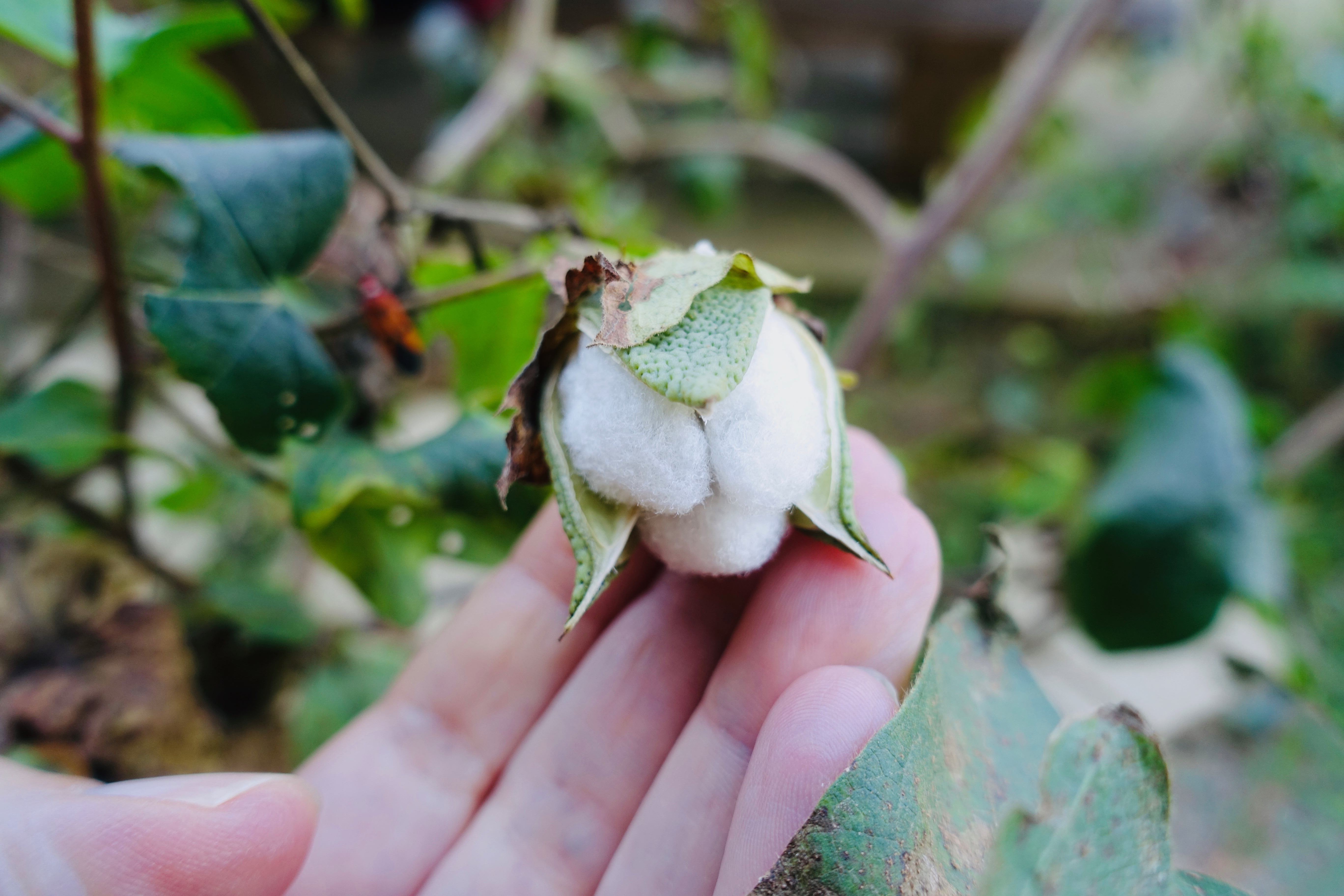
Cotton growing

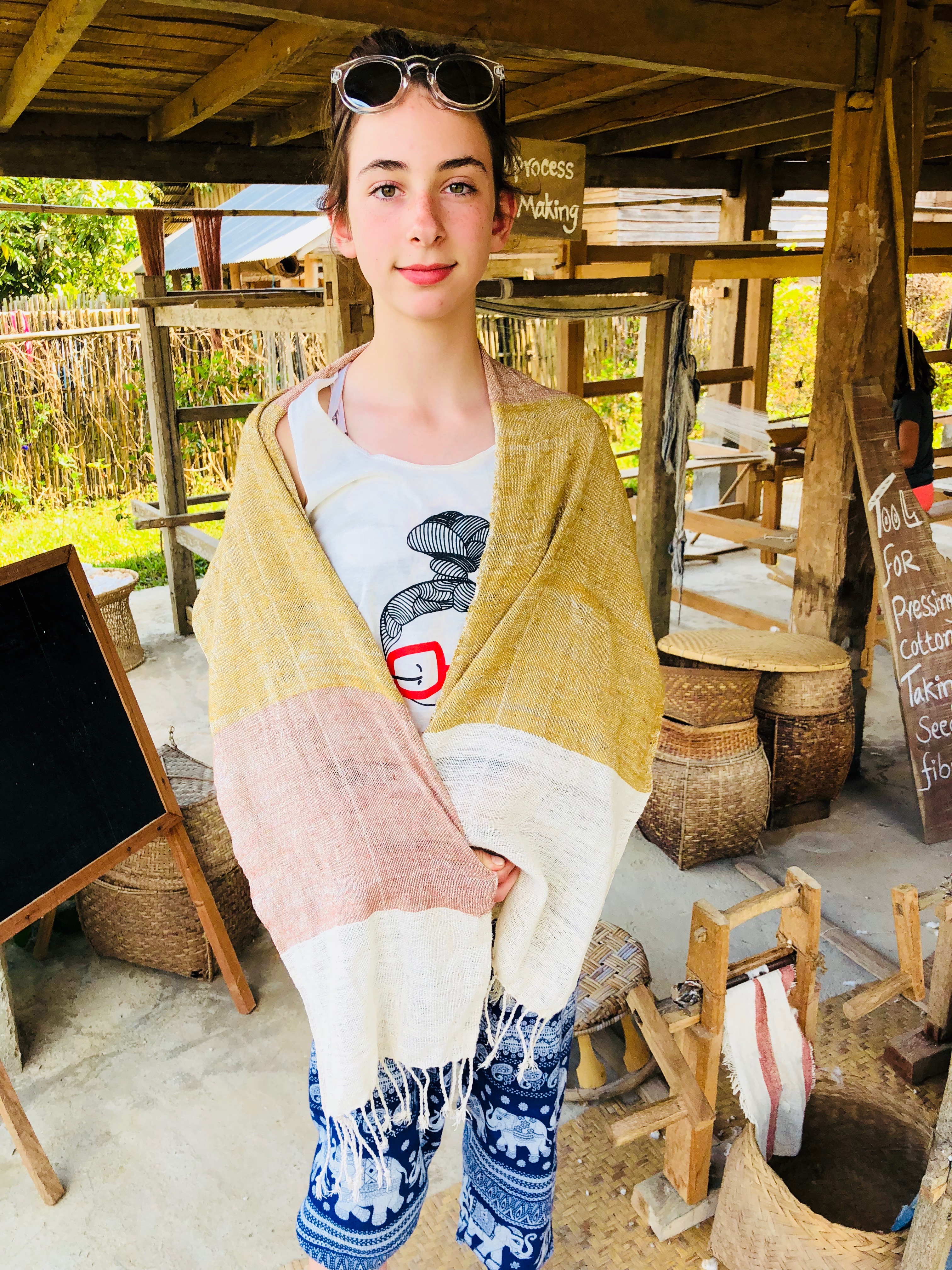
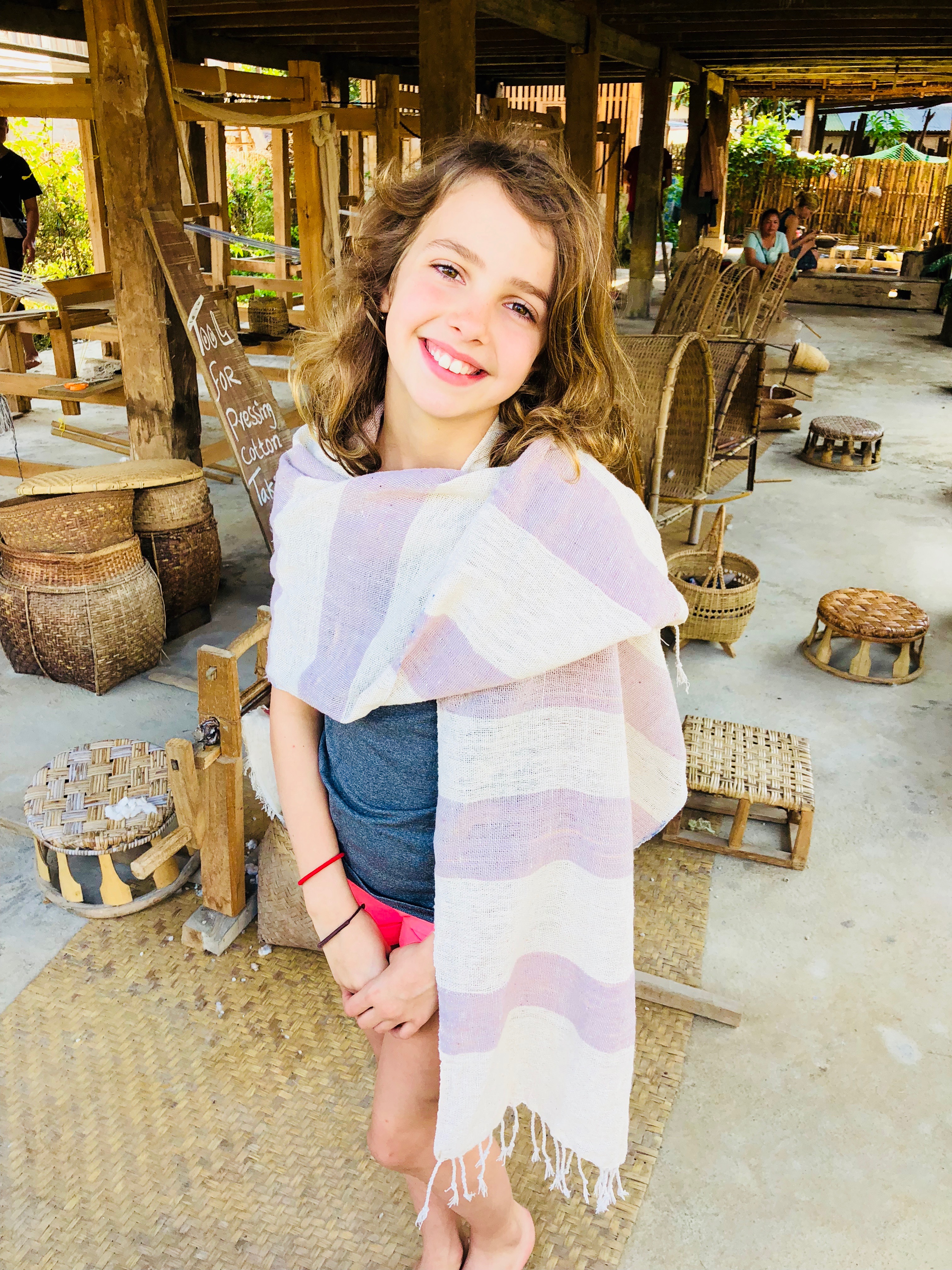
Rachael Age 13- Women all around Laos (and Asia) have a common job- weaving. They spend long hours each day making clothes by throwing a wooden “boat’ back and forth through a blanket of handmade thread. Sarah, Lily, my Mom and I took a course to learn how to weave like them.

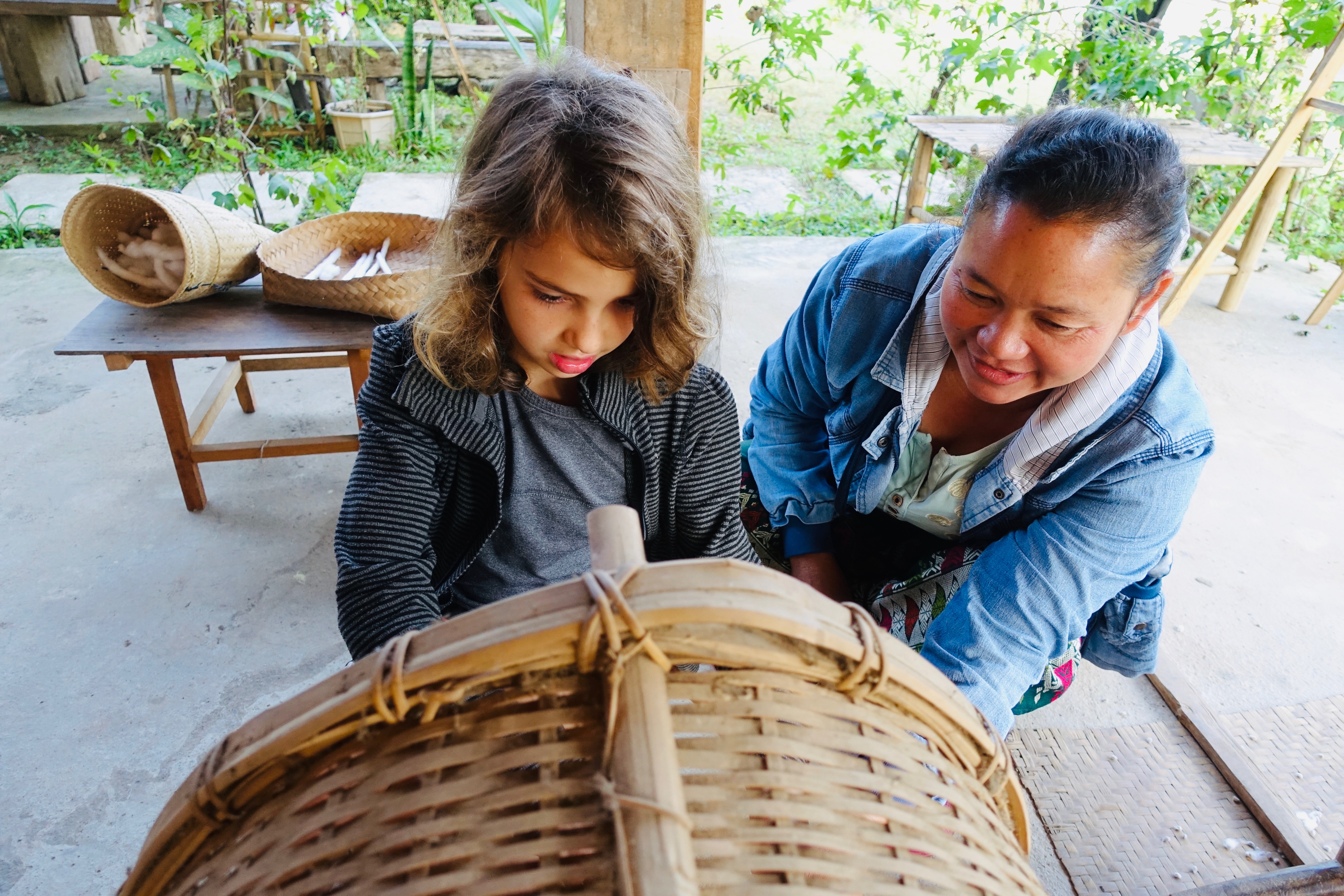
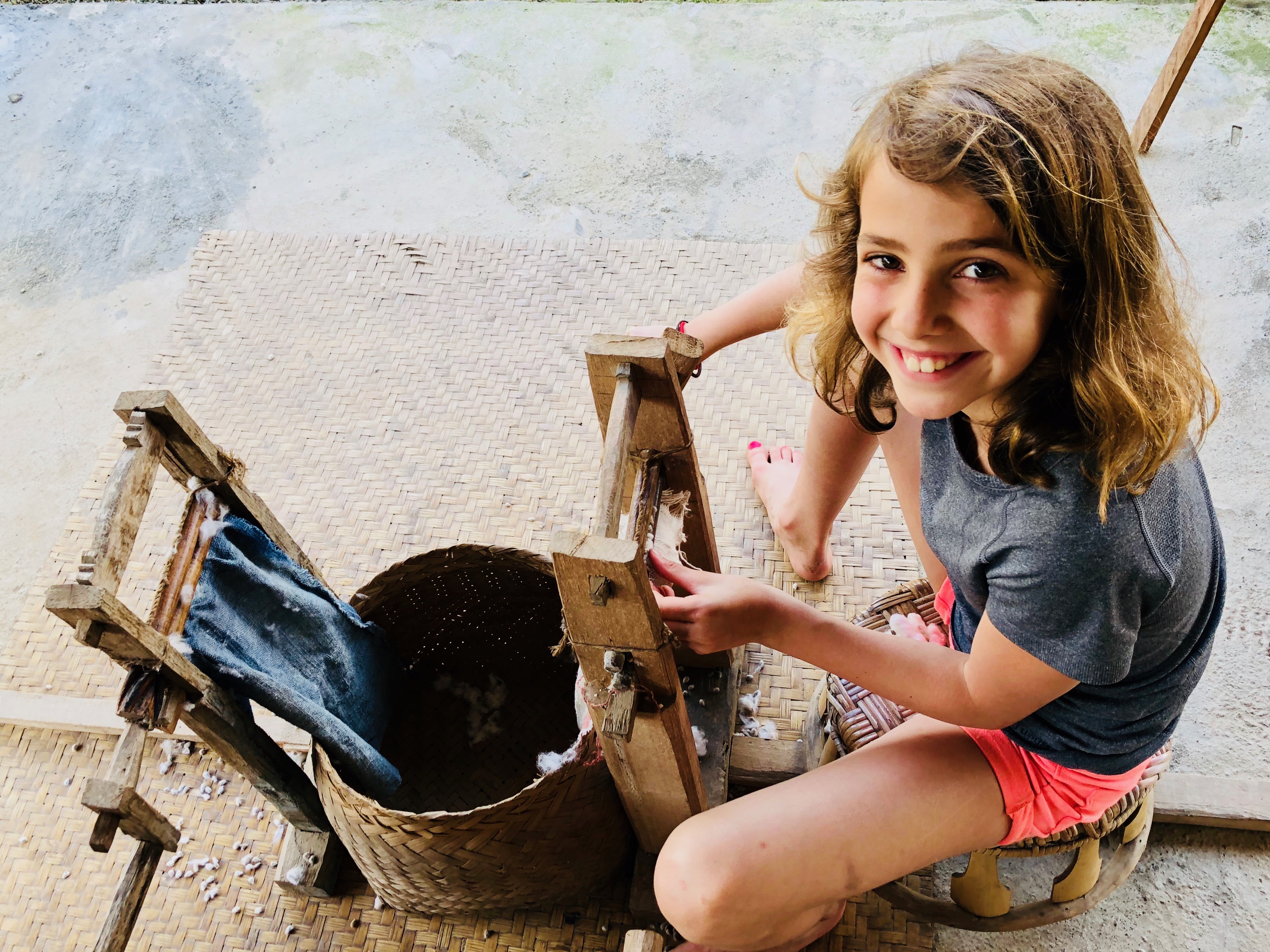
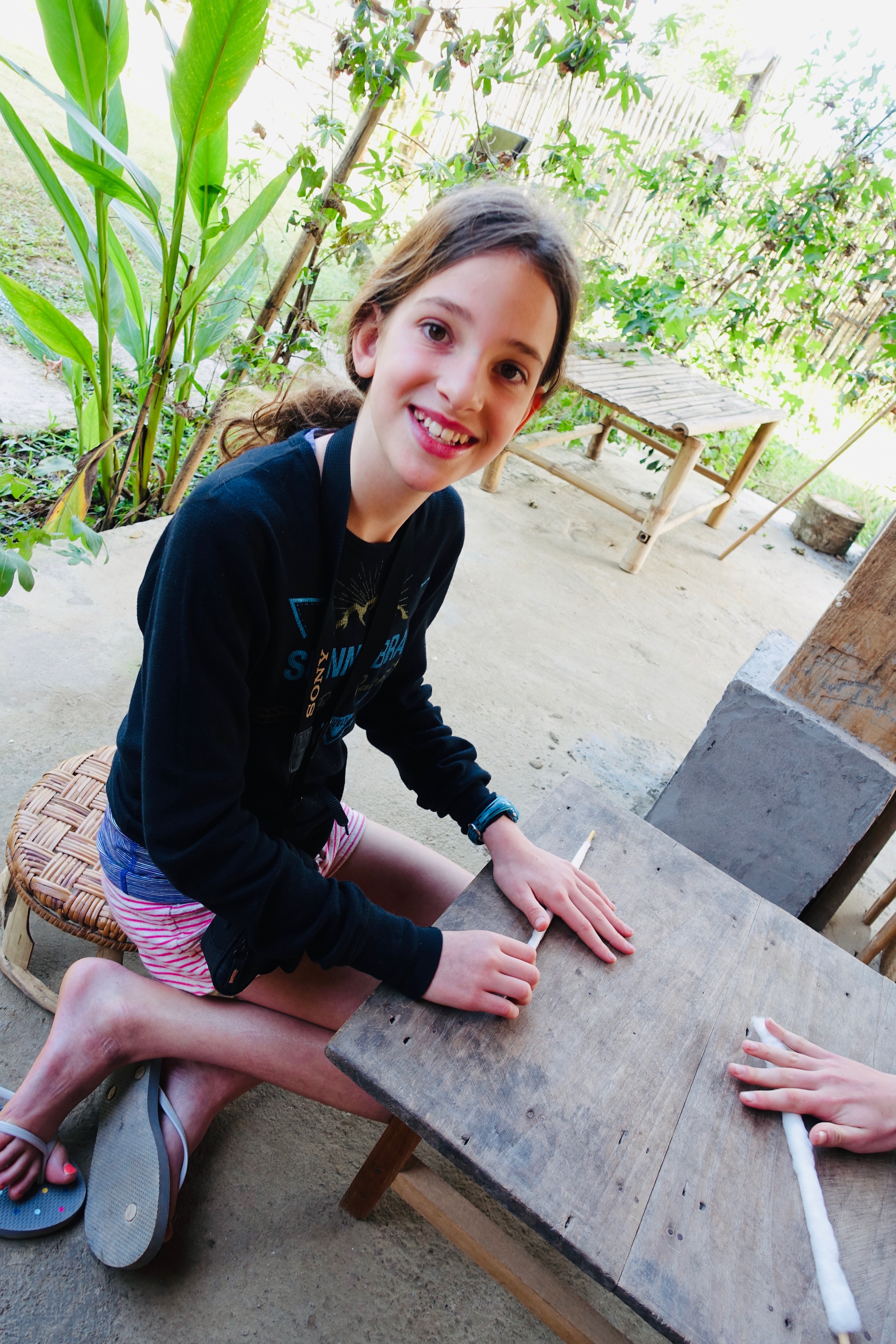
We got up early in the morning and took a “tuk tuk” (taxi) out to a small rural village in the Laos countryside. Once there, the village ladies showed us how to take plain balls of cotton they had picked, and filter them through two pieces of wood to remove all the seeds. After, we put the seedless cotton into a big basket and fluffed it up. We then began the complicated process of turning the cotton into thread, as the ladies glided the cotton black and forth through the air on a spinning axle. They made it look so effortless- but it was so hard for us!

Lily removing seeds from the cotton
Sarah rolling cotton on a spindle

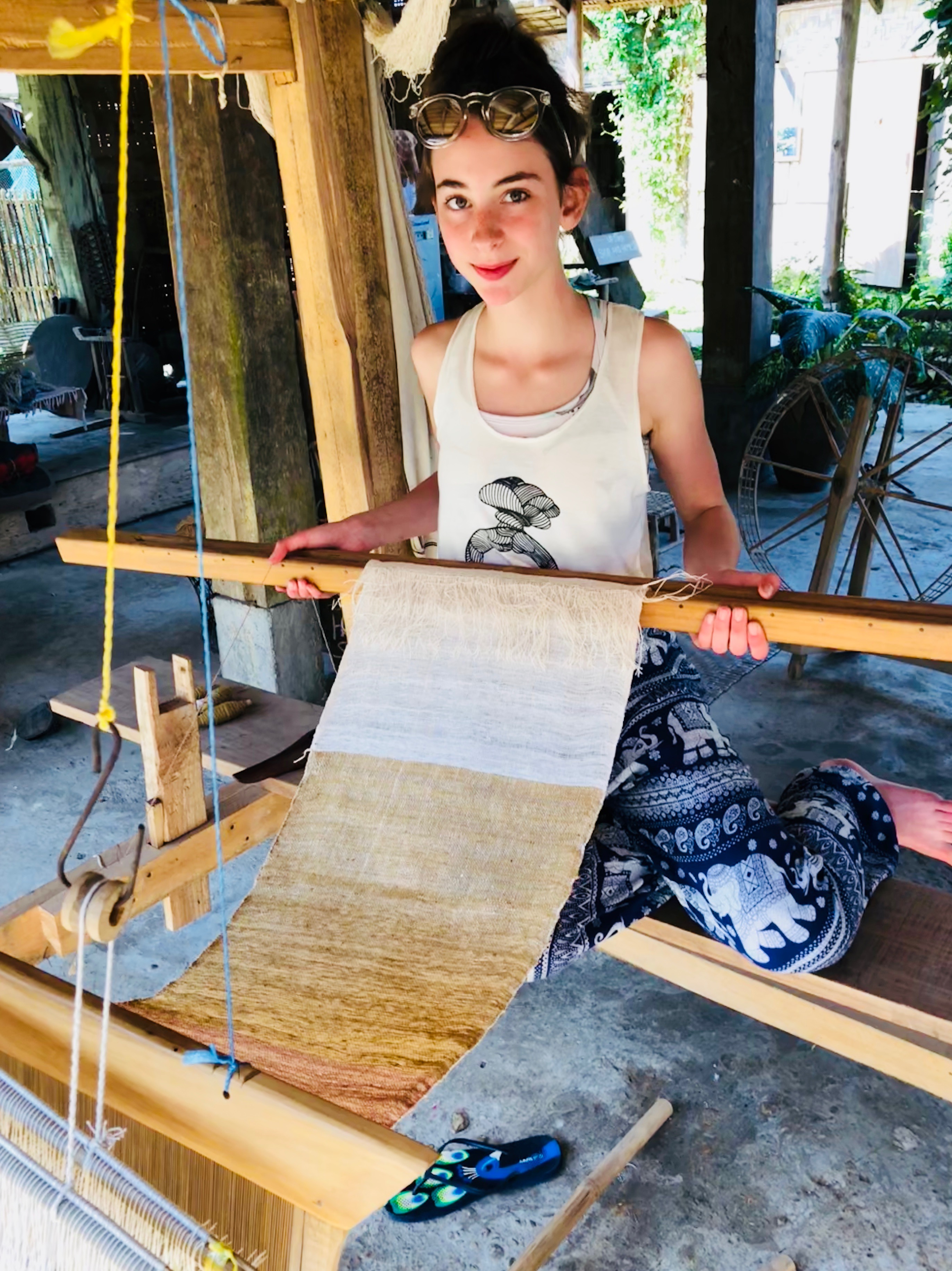
Once the cotton was turned into thread we had to dye it. We learned that they crush limestones and different leaves to make their wide array of vibrant colours. After the thread was dyed you do a number of steps to turn the thread into bobbin, so you can use it on the loom. The ladies showed us how to work the loom- which is complicated and first, but simple and repetitive once you get the hang of it. All three of us worked the loom, tossing the “boat” back and forth., watching our scarves come to life. The ladies loved helping us, especially Lily, who they would giggle at and circle around.

Rachael working the loom, her scarf is coming along!

We learned about the lifestyles of the ladies and how hard they work, and we saw the incredibly complex designs and patterns they weave into their cloth. I will never look at a scarf the same again.

When we were done, we had our scarfs to take home with us. We were excited to go see Dad and show him our handiwork.

Our Kid’s Highlights from Thailand

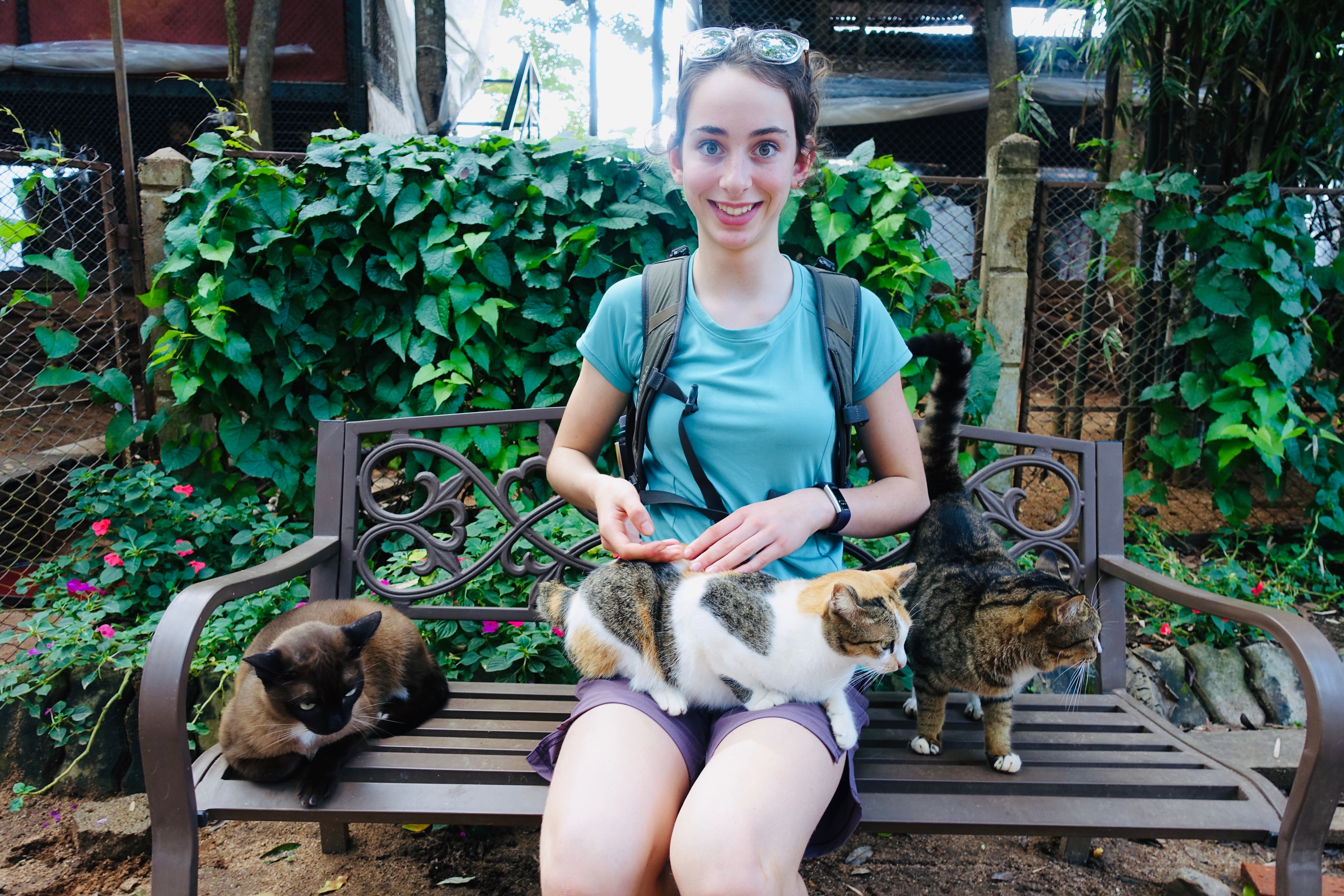
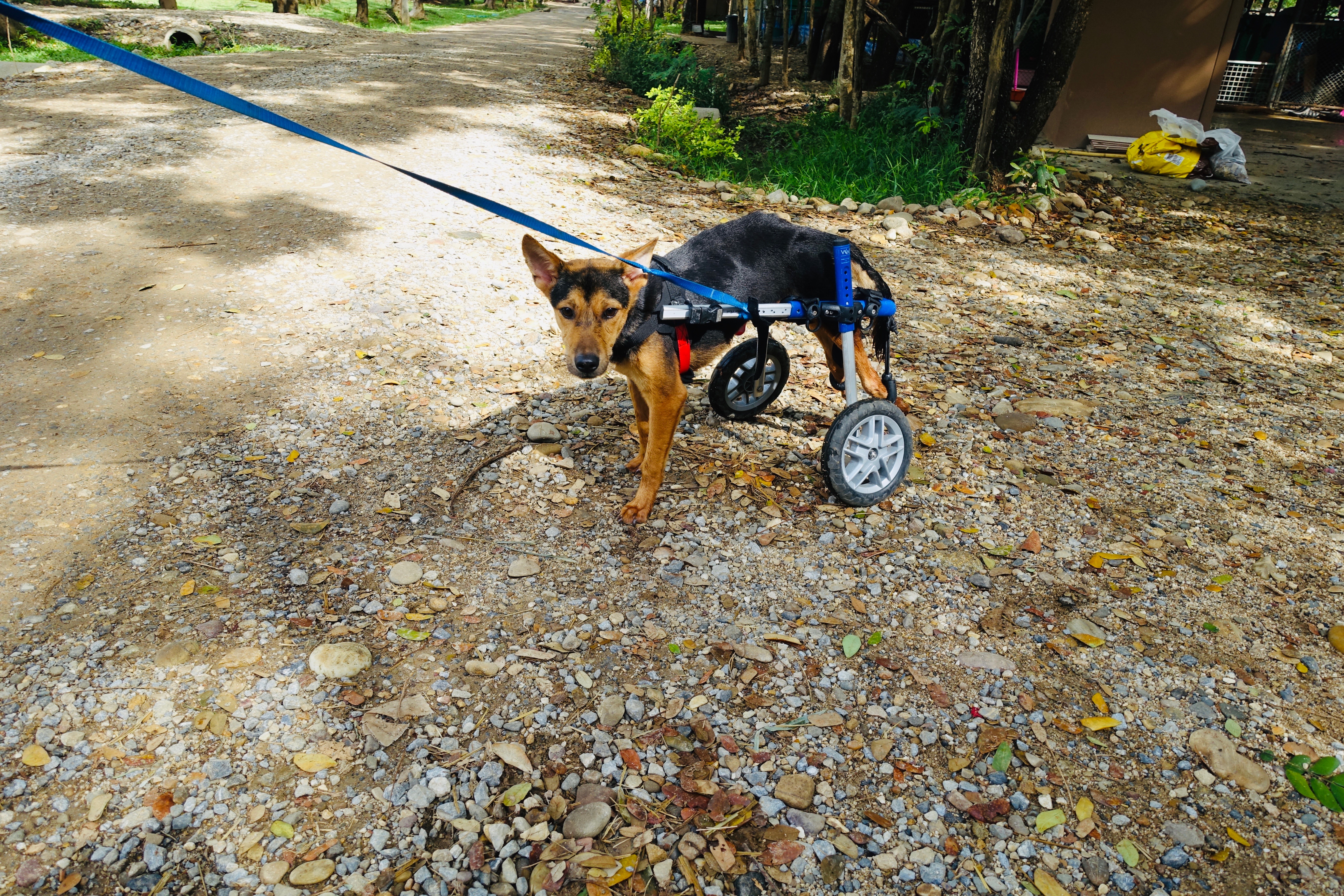
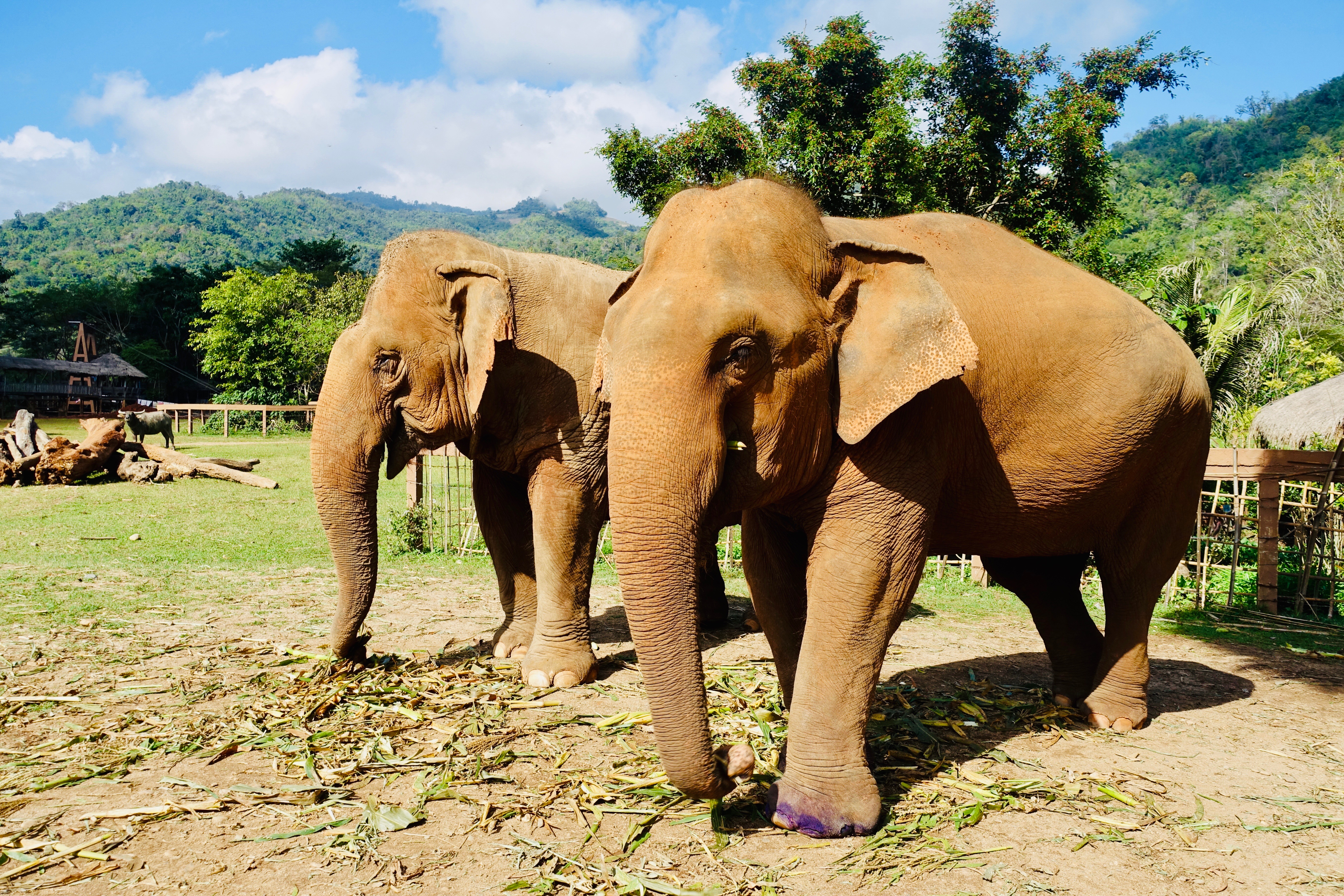
Rachael Age 13- Exploited for tourism, logging and show business, elephants from all over Thailand are not free like they were destined to be. The Elephant Nature Park gives these previously exploited creatures a fresh start and a great home. The 400 acre nature park is home to over 80 elephants, 600 rescued dogs, 500 cats, 300 water buffalo, and one very playful goat! The park is staffed by volunteers (many who come from western countries to work for 3-6 months), paid guides, and ‘mahouts’ (the elephant’s personal trainer).

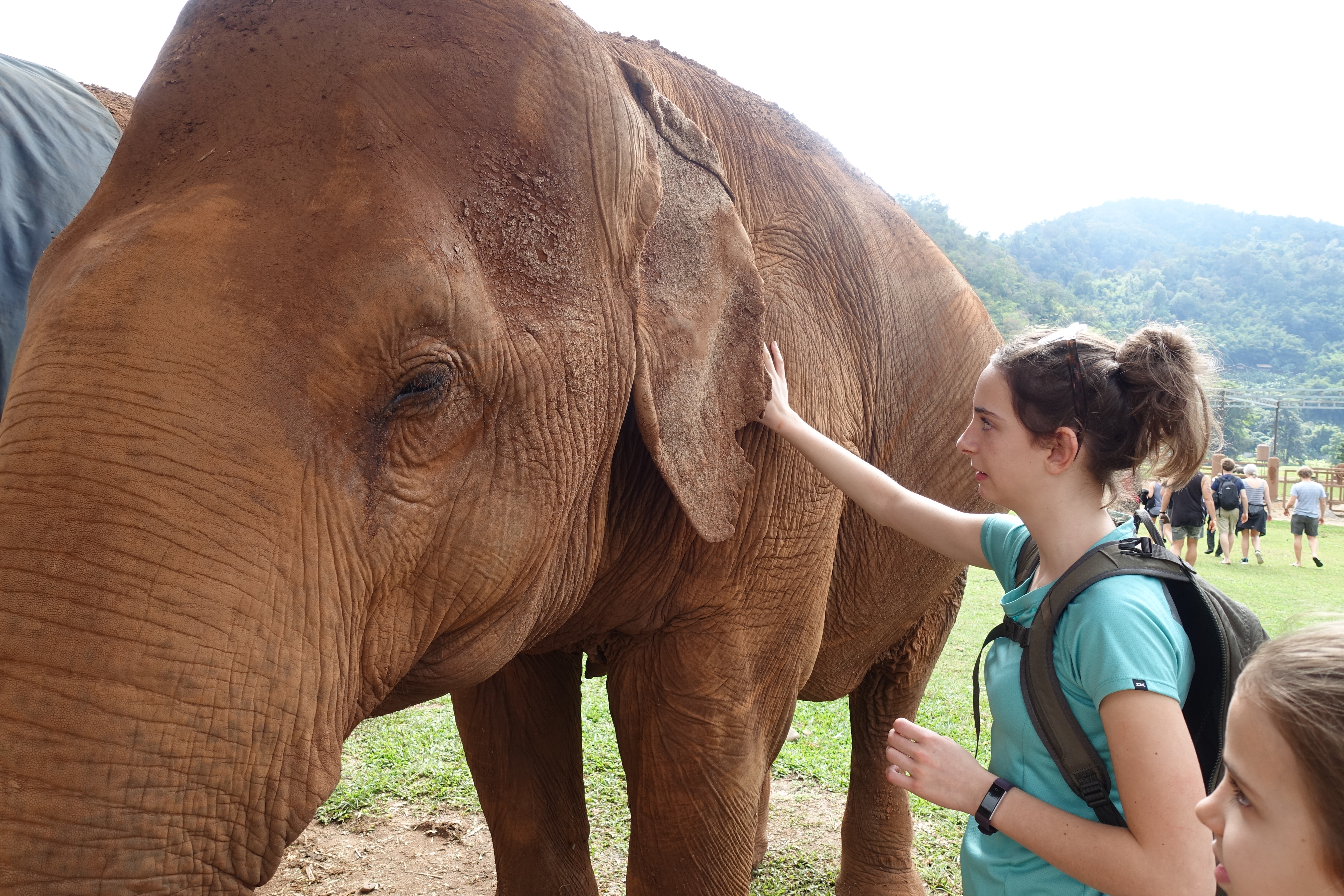
We learned the tragic stories of some of the elephant’s former lives, (even met some who had parts of their feet blown off by landmines in Myanmar) and were able to interact with them. We were able to feed them, feel their tree-bark like skin, and even observe them playing in the river. The day was over too soon; there were around 20 dogs and 10 cats we wanted to adopt, but Mom and Dad were not as keen on the idea. The experience was so much fun and very educational.

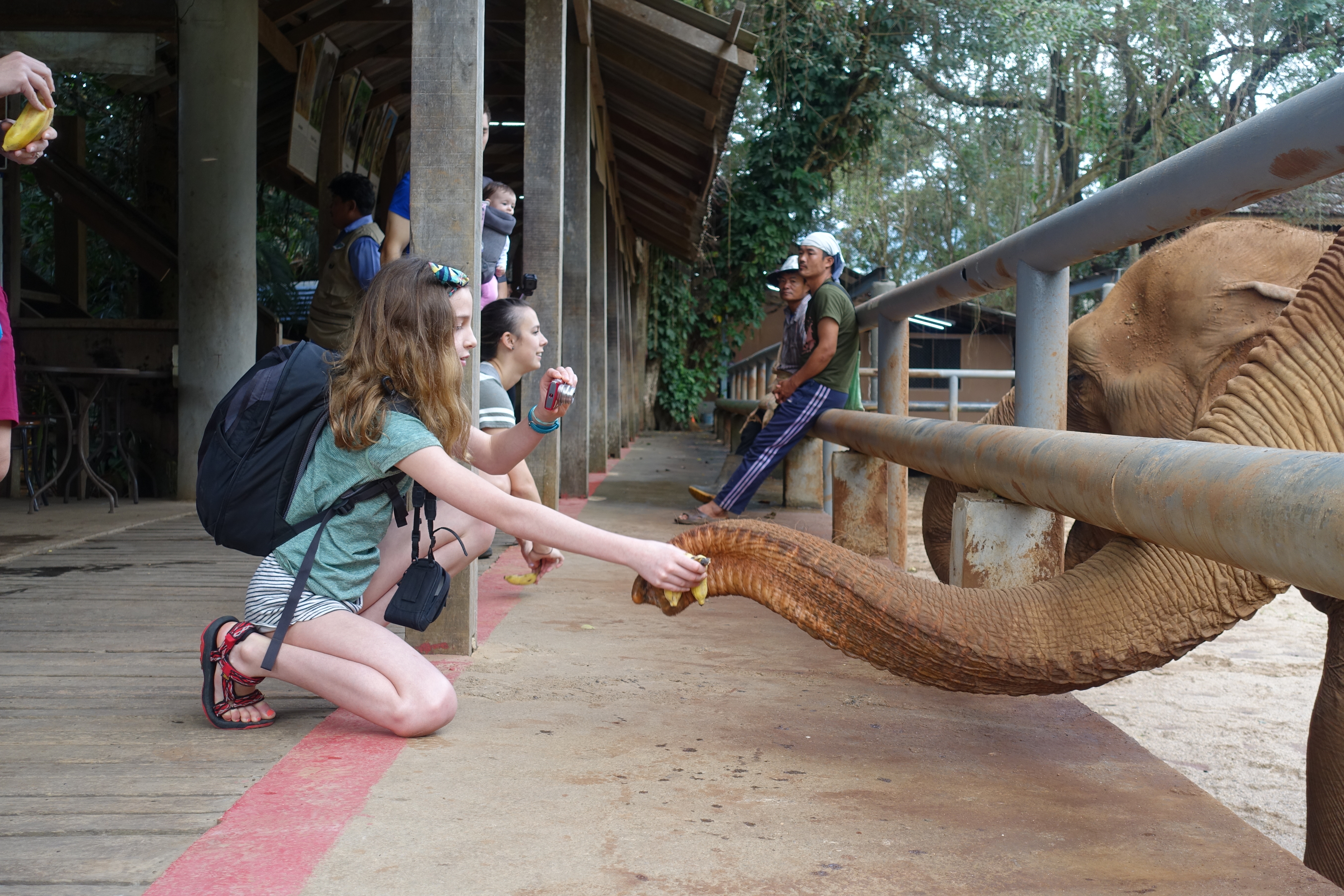
Sarah Age 11- My favourite experience in Thailand was our trip to the Elephant Nature Park. Our trip began with us feeding the elephants bananas. You would hold a couple bananas in your hand and the elephant would wrap their trunk around the bananas then throw them into their mouths.

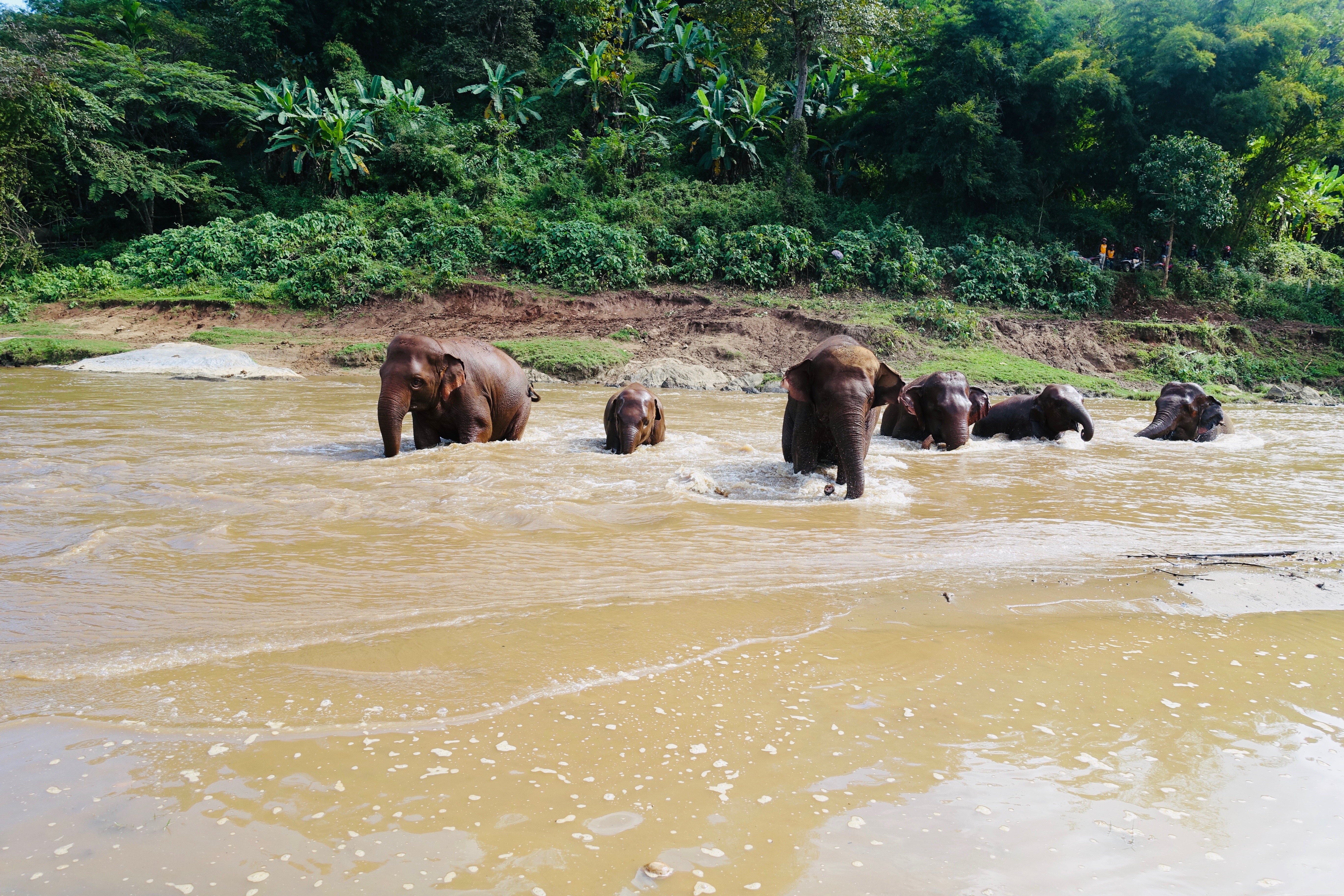
We got to pet the elephants, and their skin felt rough like sandpaper. I loved being up close to them and looking into their big eyes. We got to watch the elephants in their family units play in the water. They really came alive and would dive under and spray themselves playfully. After their bath time they would play in the mud and throw dirt on their backs with their trunks! This wasn’t to ruin a perfectly good bath, rather the dirt and mud acts like sunscreen for their skin- they can get sunburns too!

I like how educational the sanctuary was. We learned how so many elephants in Thailand are used in logging, street begging, and in the tourist trade giving rides. All of these actions are generally abusive to the animals. The sanctuary rescues, and buys elephants from these places where they are being mistreated and gives them a home where they are well cared for and have lots of room to roam free.

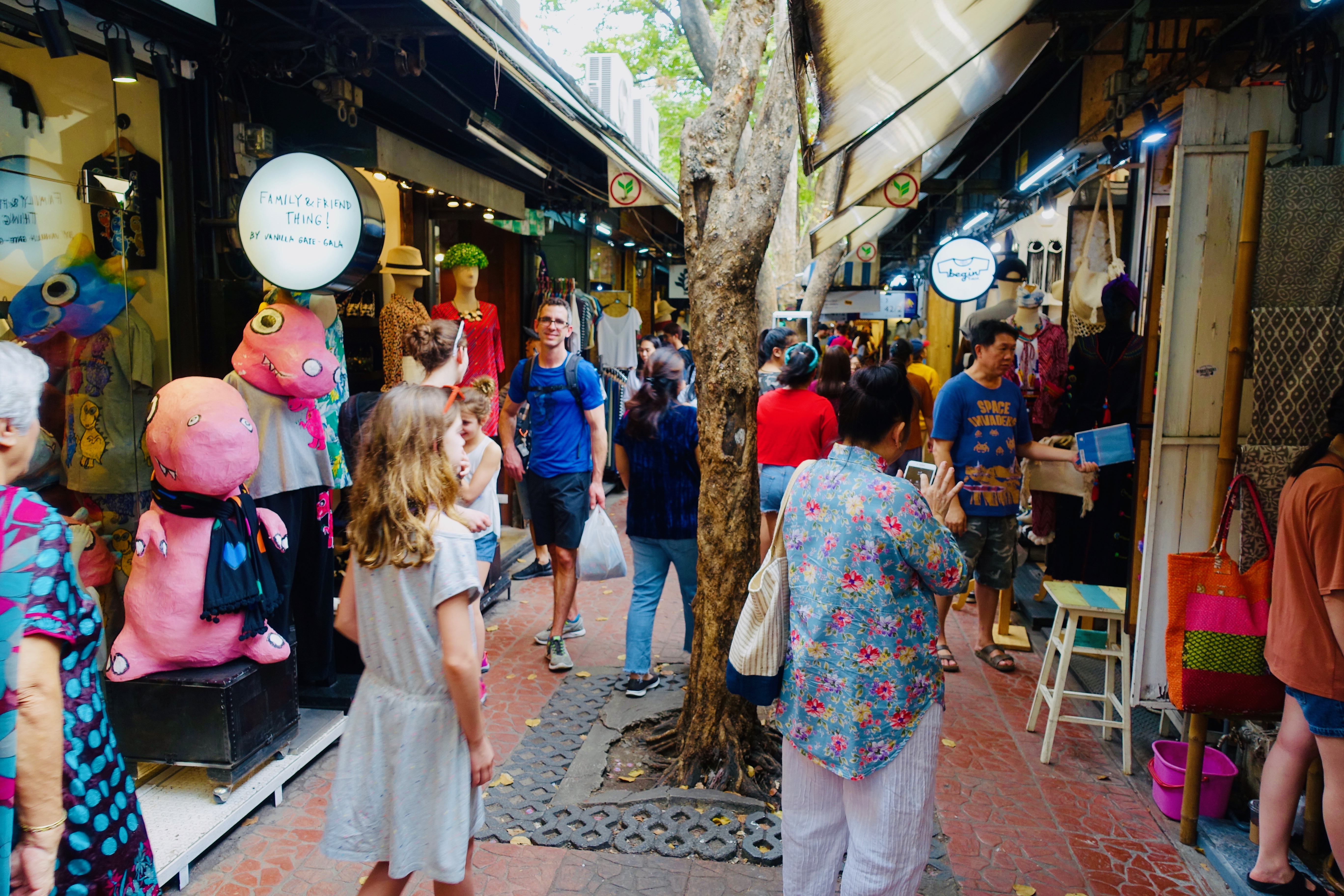
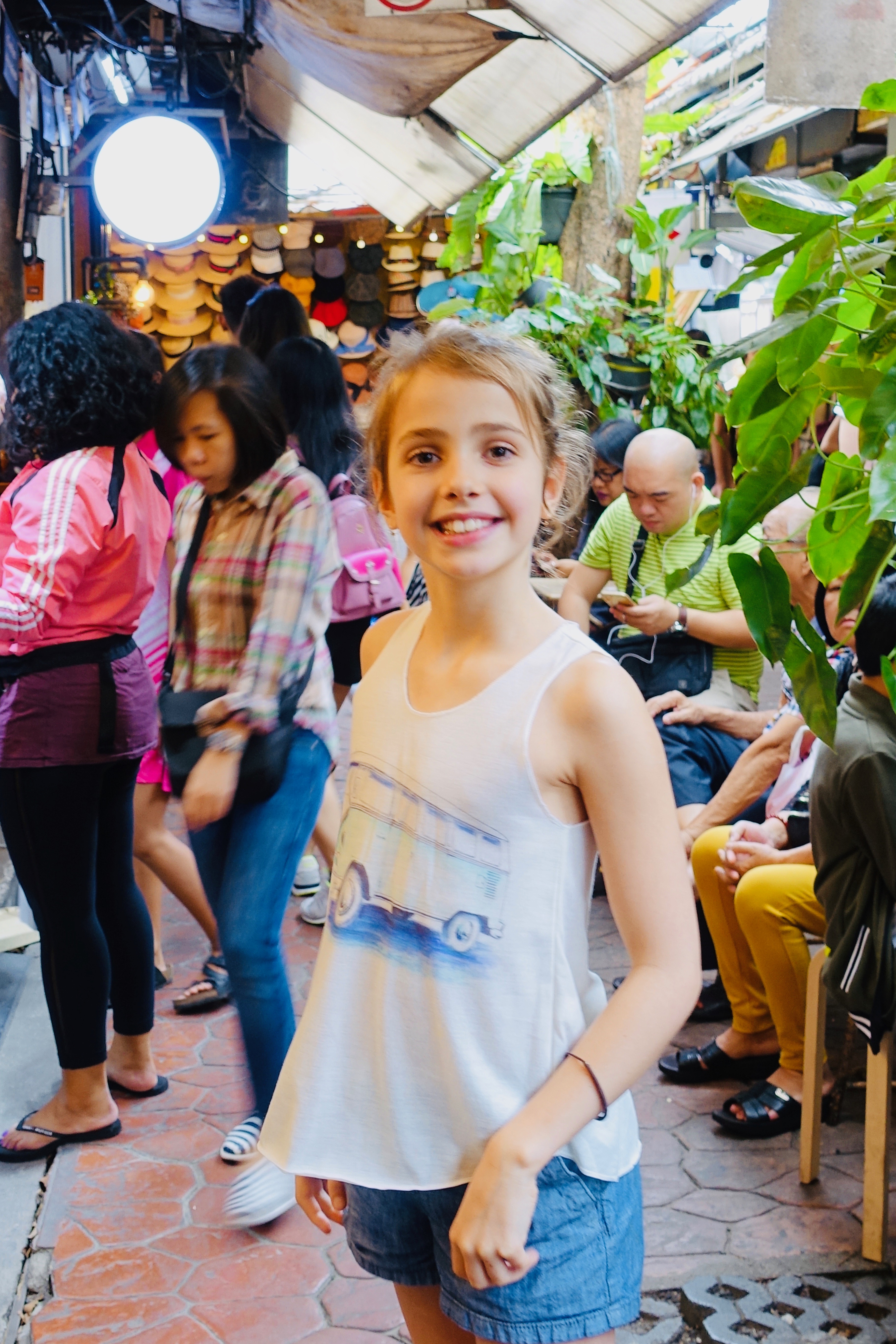
Lily Age 8- One of my favourite things we did in Thailand was visiting the famous Chatuchak Market. The market is huge and packed with people. There were 8,000 different stalls selling all kinds of stuff like jewelry, clothes, food, even baby squirrels! My mom’s watch told us we walked 14 kms, and we saw less than 20% of the market. I bought some stuff for my friends, and a few things for myself: a shirt, a scarf, and a pencil case with the money I saved for the trip.

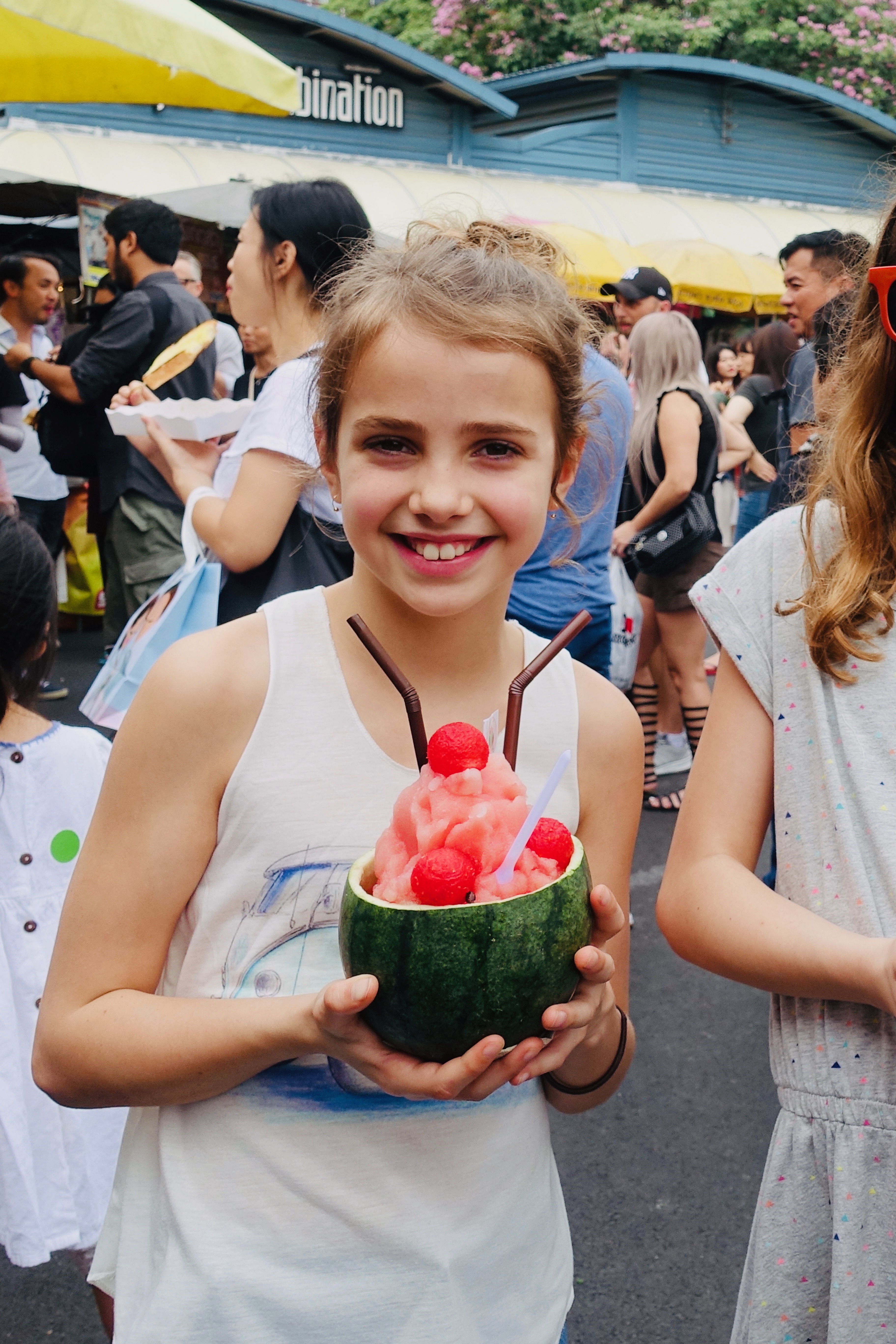
I got to have a smoothie with the water melon being the cup! There were lots of gross food like snakes, scorpions, octopus and even fried pig’s heads! Yuck!

Thailand Impressions

After 14 hours on the plane we arrived in Bangkok, blurry eyed, jet lagged, hungry, yet excited to begin our journey. Now we had four full days in Bangkok to acclimatize to the time change and see some of the sights.

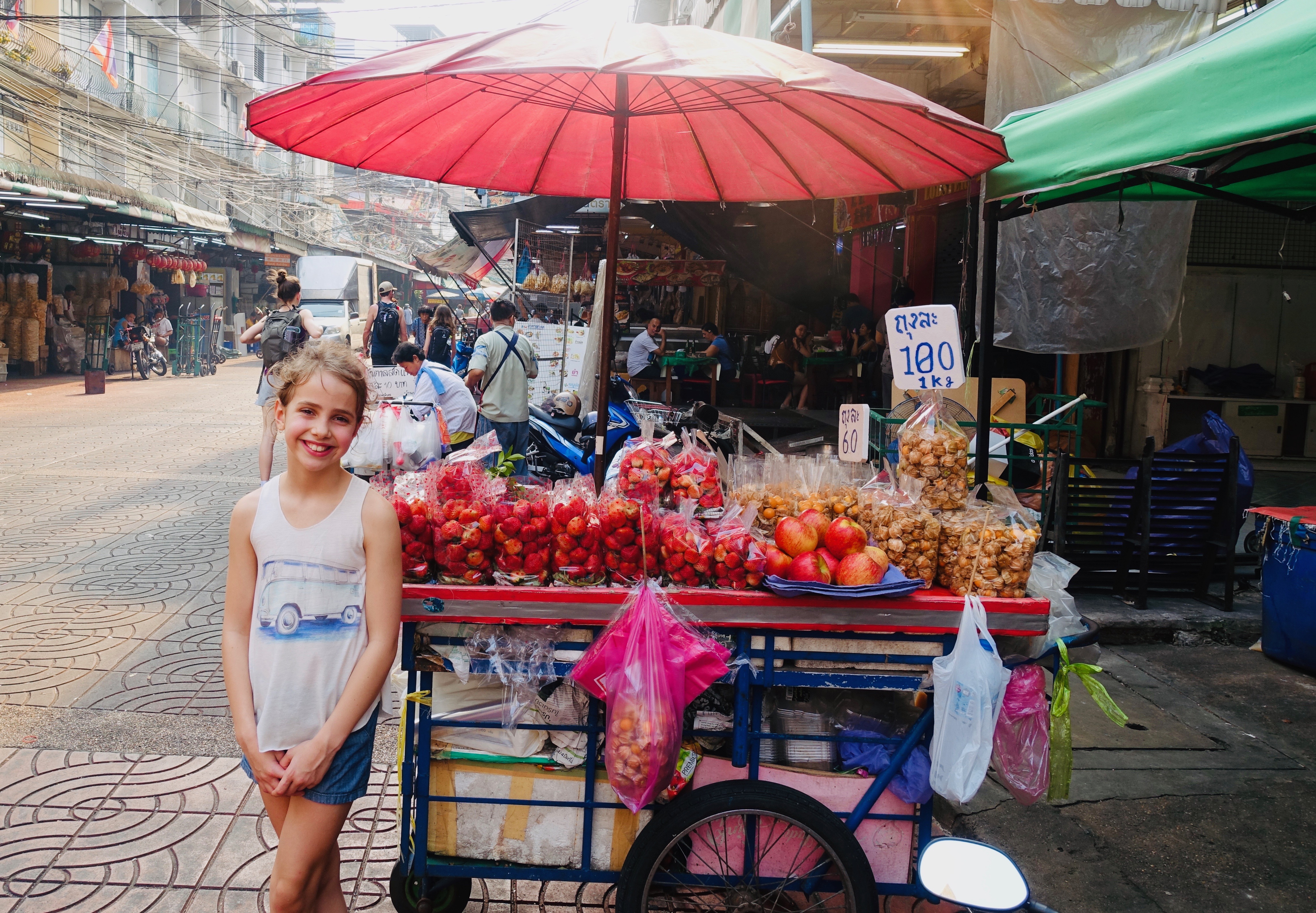
Bangkok is certainly busy and crowded, yet oddly orderly and efficient. The buildings are a weird mashup of dilapidated shacks mixed with uber- modern buildings like something out of Ridley Scott’s Blade Runner. The city smells a flowing mix of exhaust fumes, sewer gas, fish sauce (the worst of all smells, in my opinion) and some delicious aroma wafting out from the near ubiquitous street vendors cooking all manner of foods. Every winding street has houses fronting small restaurants selling cheap but honest food. In fact we had some of our best meals at the most unassuming little hole in the wall. Good food is everywhere in Bangkok.

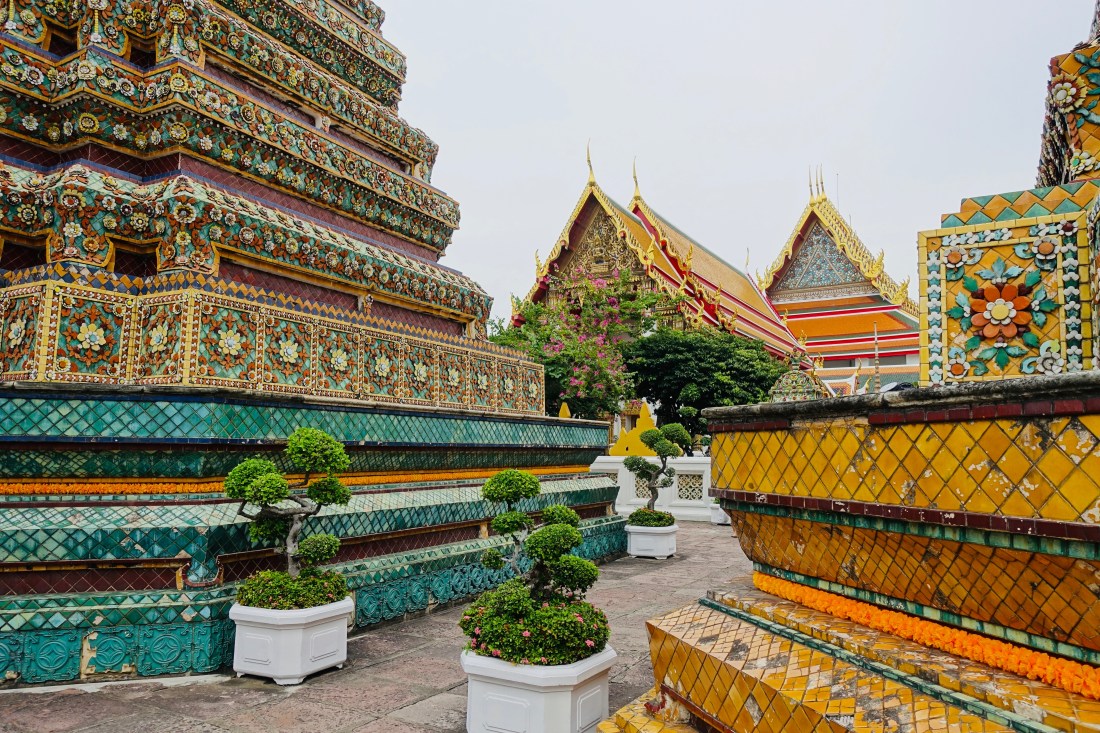
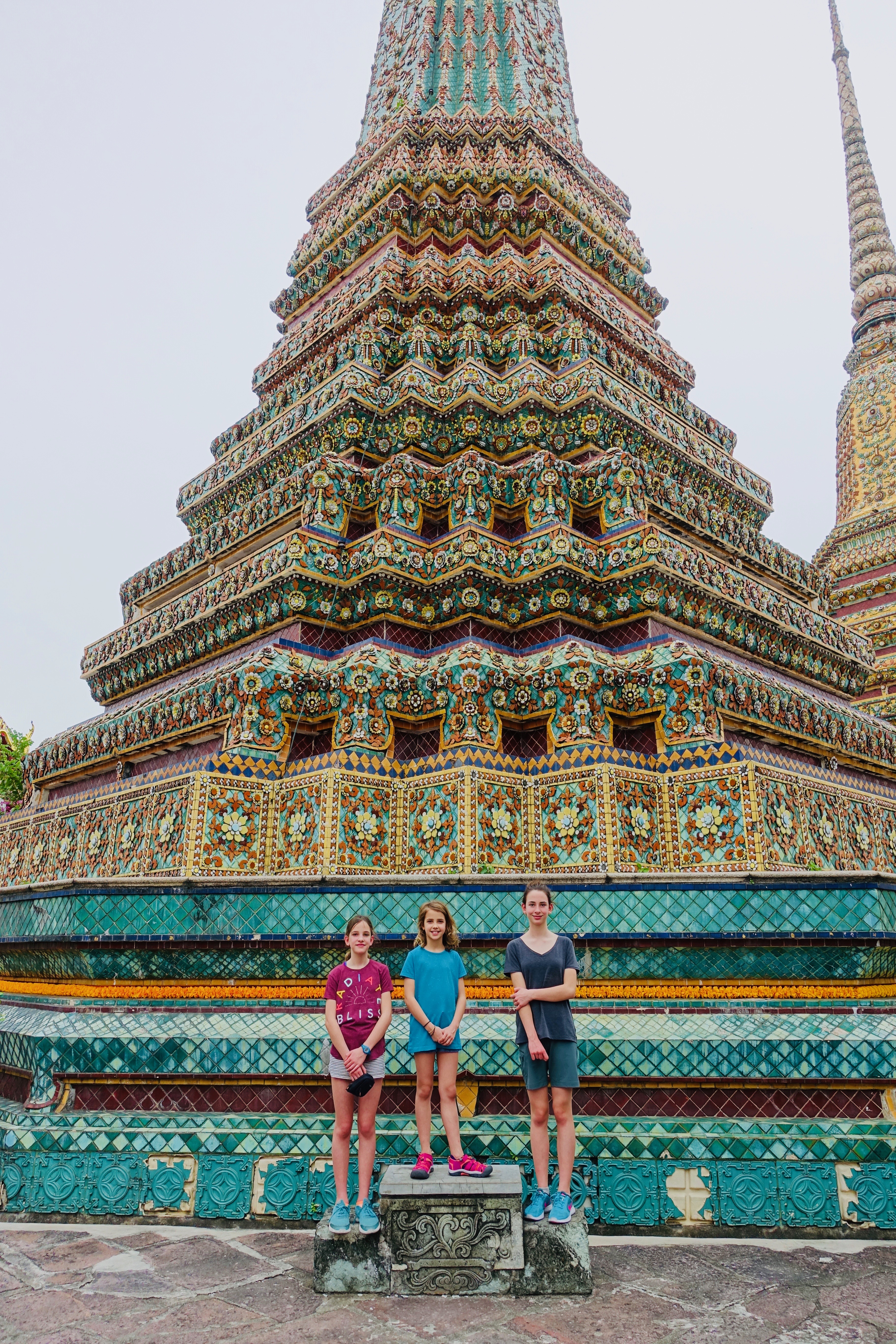
We checked out some impressive temples with beautiful pagodas, but I (Shawn) found myself feeling increasingly “meh” with each consecutive one. There are only so many golden Buddhas you can see before it feels like you are stuck in some loop on endless repeat. We actually found some of the smaller and more unassuming temples in Northern Thailand to be more poignant with their impressive craftsmanship not covered in gold and glitz.

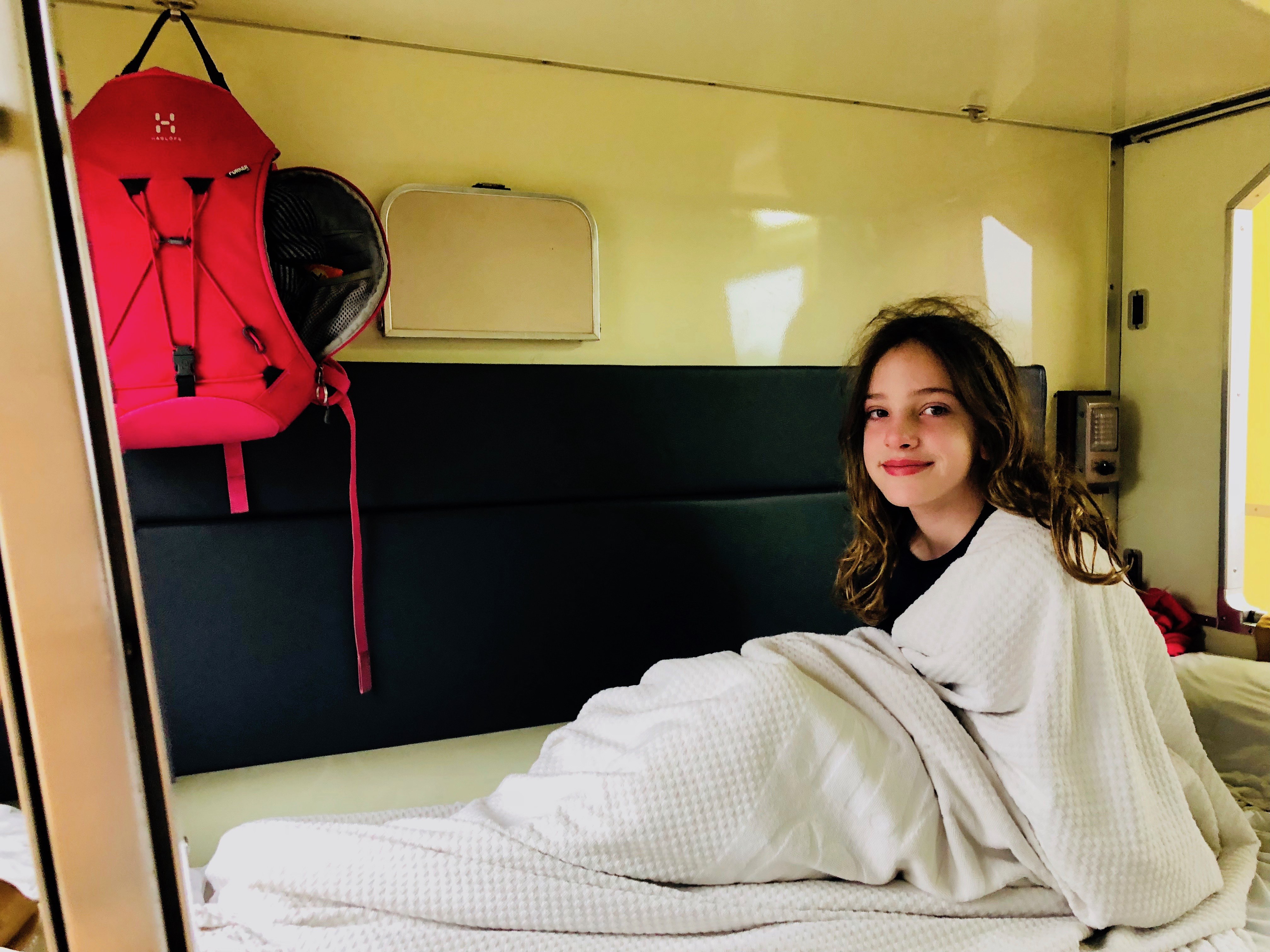
Shivering on the sleeper train

We caught a sleeper train to Chiang Mai. I use the word “sleep” very loosely. The A/C in the train was so powerful and so cold that we all put on every layer we had (ie. two layers of socks and shoes), raided the blanket closet for any extras we could find, and still we shivered through the night. Odd that one of the coldest night sleeps I’ve ever had occurred as we rumbling through the steaming jungle.

Chiang Mai, appealed to us more than Bangkok. It is so small in comparison and moves at a much slower pace. It is clearly a thriving tourist hub as European looking bohemian backpackers seem to dominate the old city. And there are temples everywhere. Seriously. My kids started saying “not another temple!”

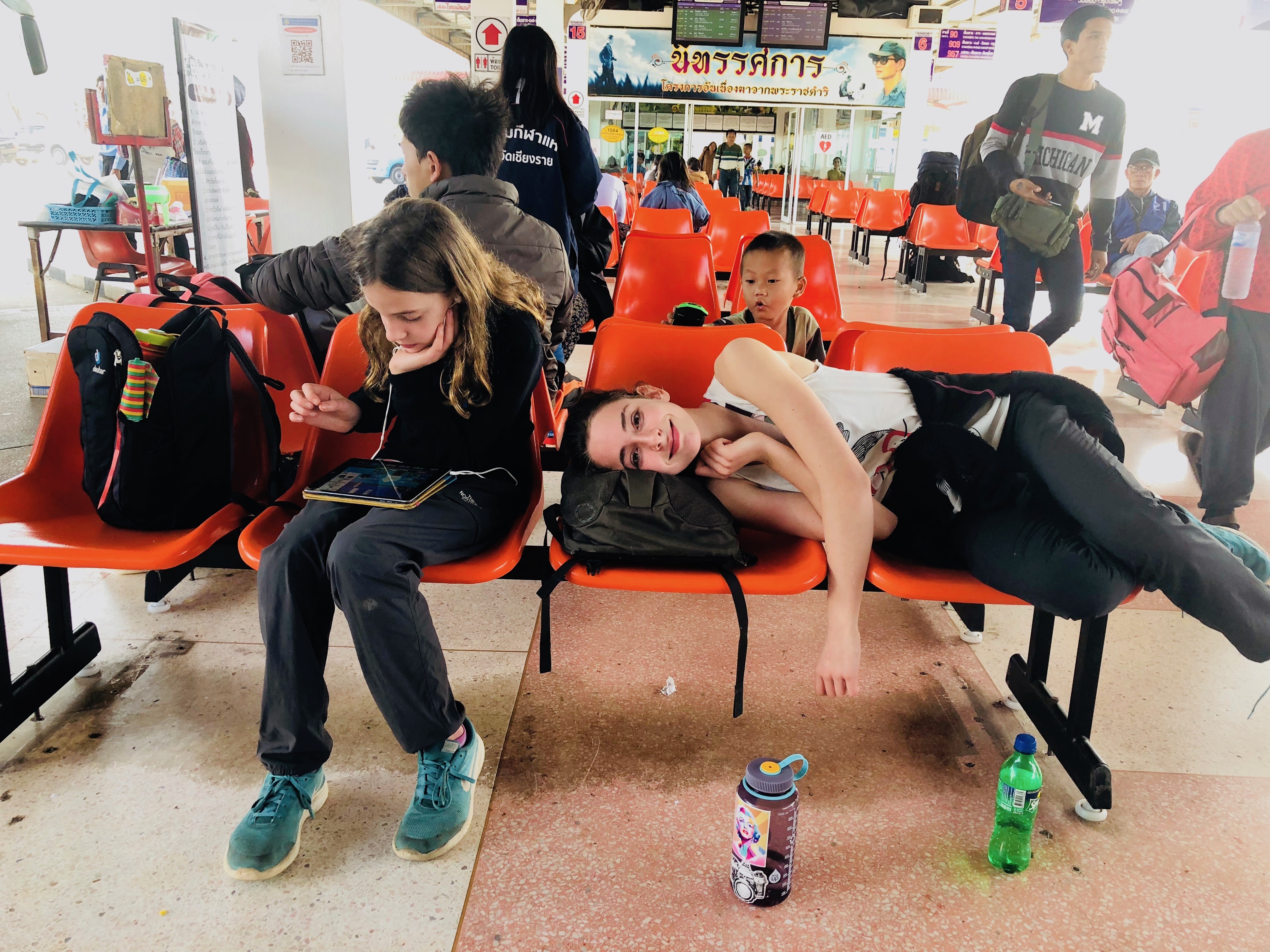
Waiting for the bus to take us into Laos

Further north is Chiang Rai, more a giant truck stop than a city – definitely on the seedy side. “Massage” pallors are everywhere, with ladies soliciting quietly. The seedy underbelly of sex tourism is on full display in Northern Thailand. It is a tragic reality that men, women and even children are exploited for the gratification of tourists. It is a dark spot on this beautiful country.

In the next post, I’ll let my kids share some of their favourite experiences they have had so far in Thailand. Thanks for reading along!
sb
Setting Off!

Three kids, four months, through four countries, sounds like a daunting adventure, but it is one we have dreamed of for years now.  Several years back we began putting money away each month, and started dreaming together as to where we might go.  Traveling has always been a passion for us, ever since we visited Africa together while Shawn was on sabbatical six years ago.  There is something about stepping off a plane and having all your senses bombarded with the new and the different; you feel instantly alive.  Whether is was wandering through a maze of stalls in a spice market, or trying a new dish at a back-ally restaurant, we loved being immersed in a new culture.  So we were eager to try it again.

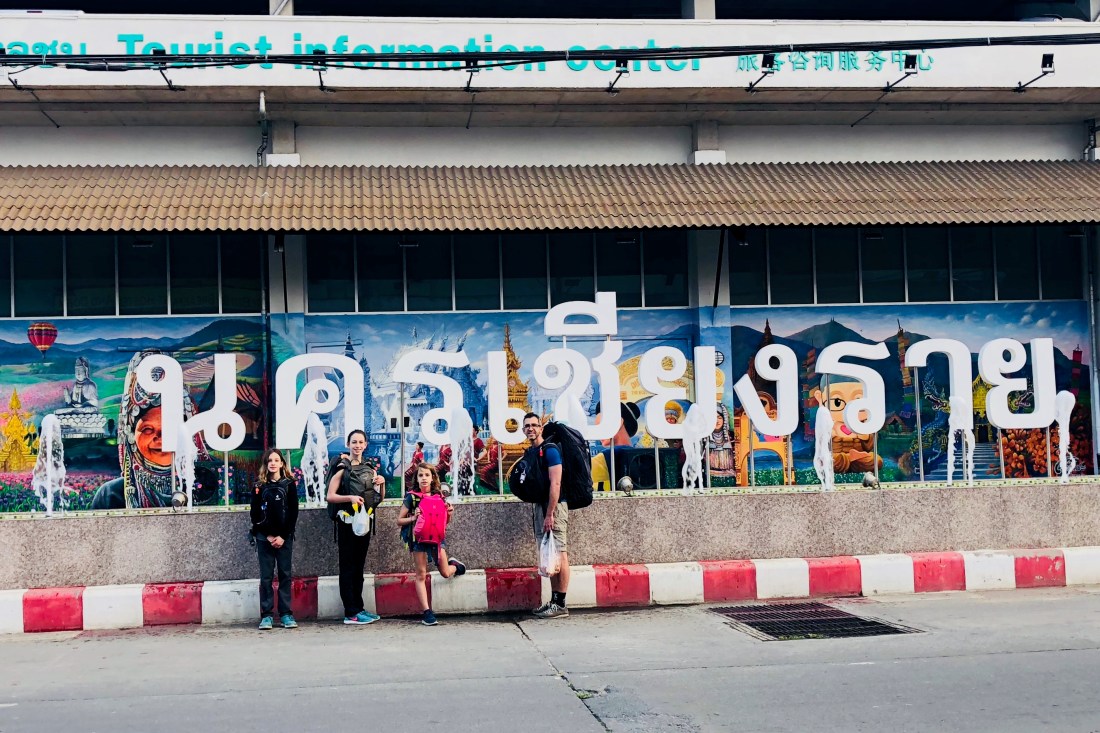
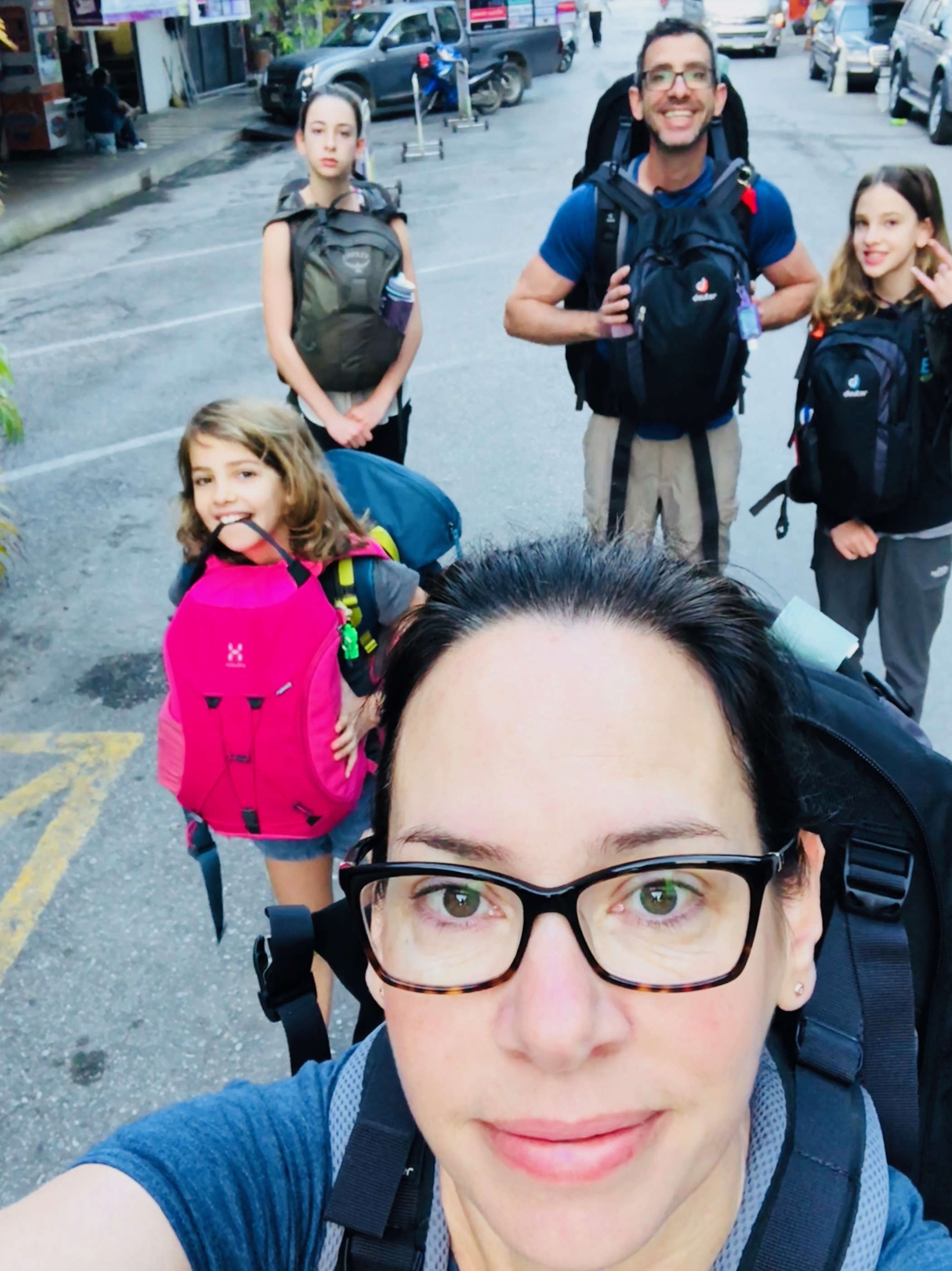
Heading to catch a bus in Chiang Rai

After lots of conversations (all of us), and research (Kimberley), we settled on South East Asia for a few reasons: it is relatively affordable to travel here, the weather is warm during our trip time (Jan – April), and the scenery is jaw droppingly beautiful.  So we decided to trek our way through Thailand, Laos, Cambodia, and Vietnam.  We talked to previous travellers, read travel blogs, and Kimberley highlighted up the Lonely Planet book to help us set out an itinerary which would take us off the beaten path.  We wanted to avoid as many of the tourists traps as possible and experience life in some more remote locations.

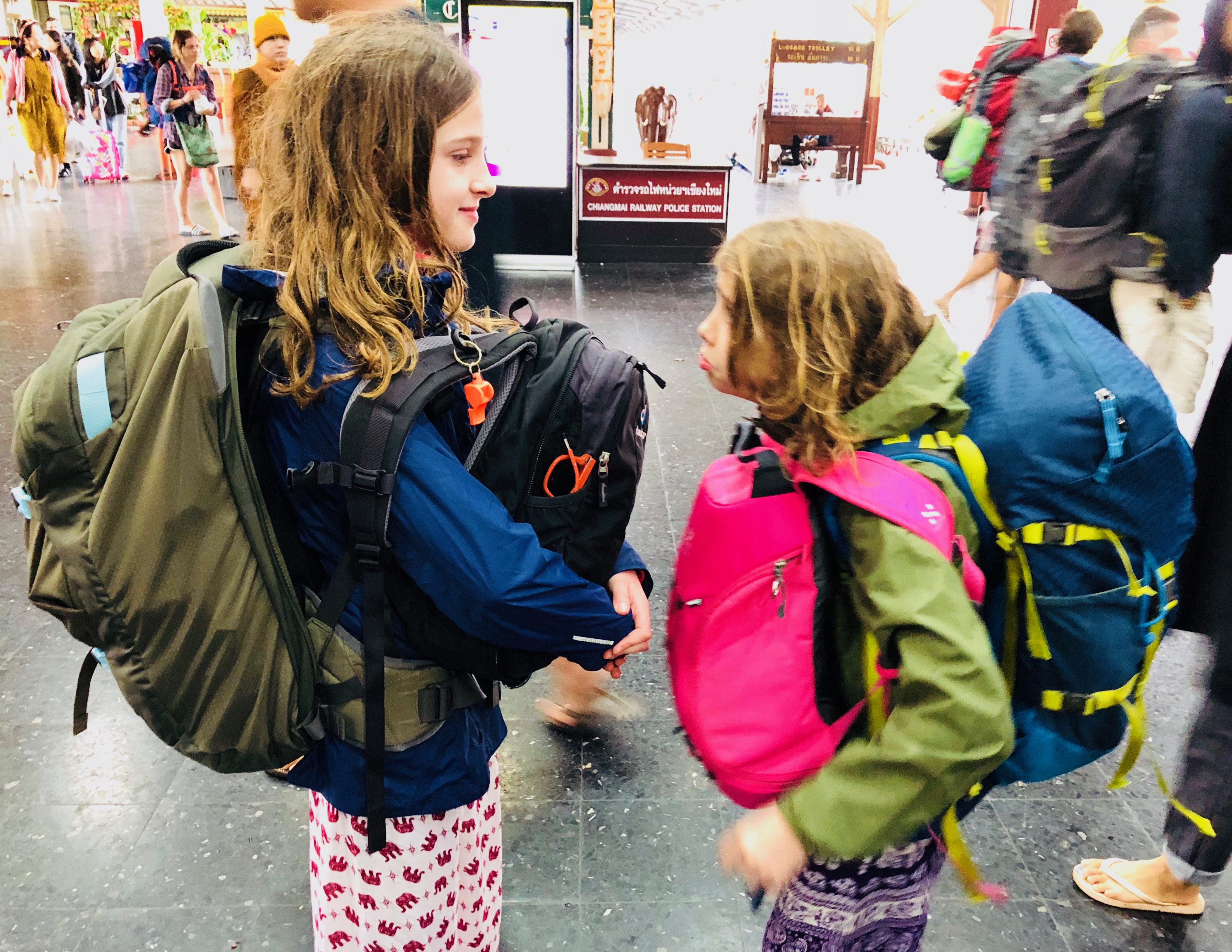
Carrying only what we can pack on our backs we are looking forward to trekking, exploring, tasting, and hopefully blogging our way through South East Asia.

Cheers,
The Bardens